Quick Answer: A Bosch microwave not heating is usually caused by a blown thermostat, a faulty door switch, a failed high-voltage diode or capacitor, a burnt magnetron, a faulty control board, or a worn stirrer coupler. Since microwaves retain high-voltage charge even when unplugged, repairs beyond the exterior should be handled by a licensed technician.
Key Takeaways
- A Bosch microwave that runs but doesn’t heat has six likely causes, not just “the magnetron.”
- Humming with no heat usually points to the diode or capacitor, not the fan or motor.
- The stirrer coupler is a low-cost part that’s often skipped in generic troubleshooting guides.
- Built-in Bosch microwave repair costs vary widely by part – always get a diagnosis before a quote.
- Opening the housing yourself is genuinely dangerous due to stored high-voltage charge.
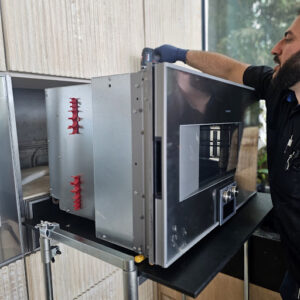
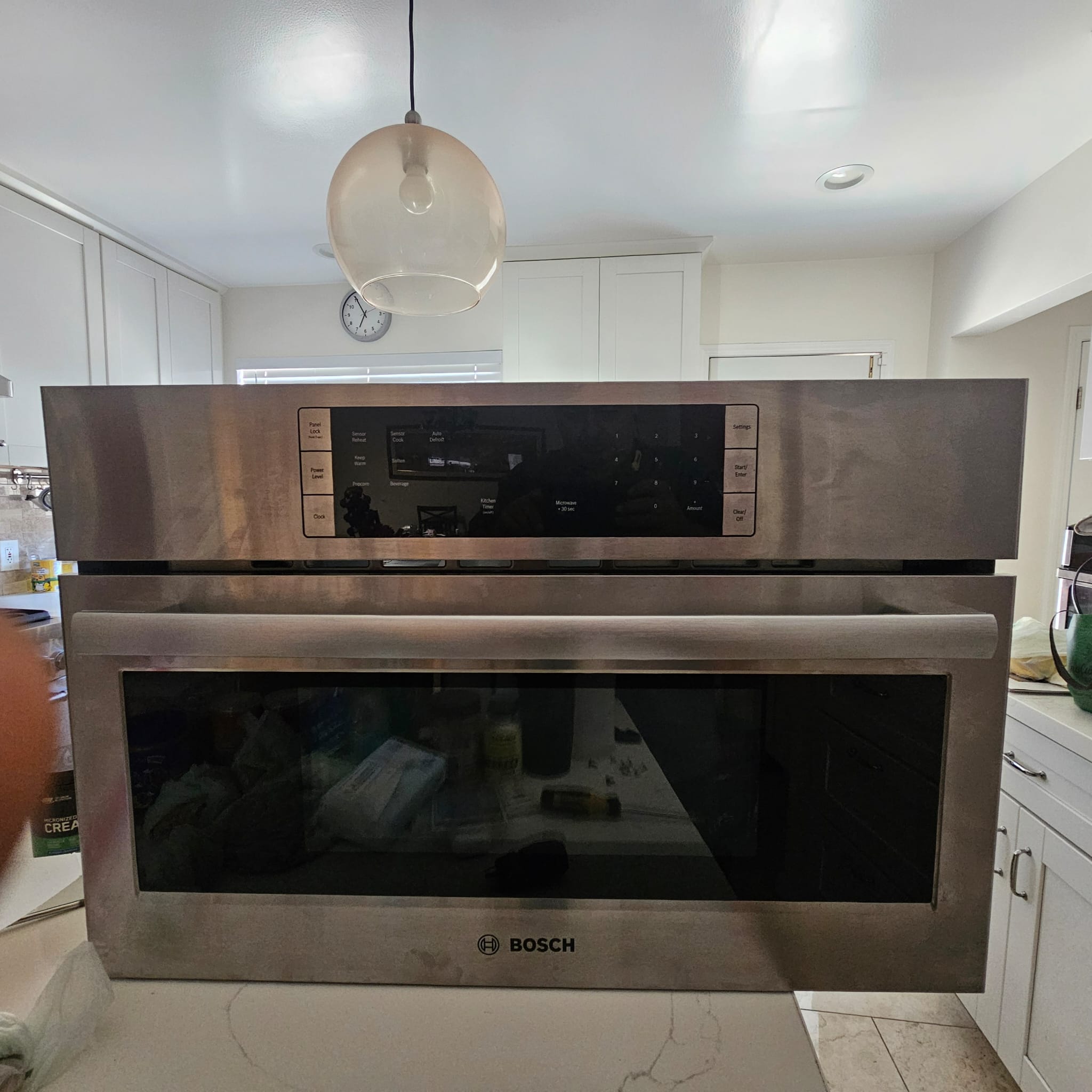
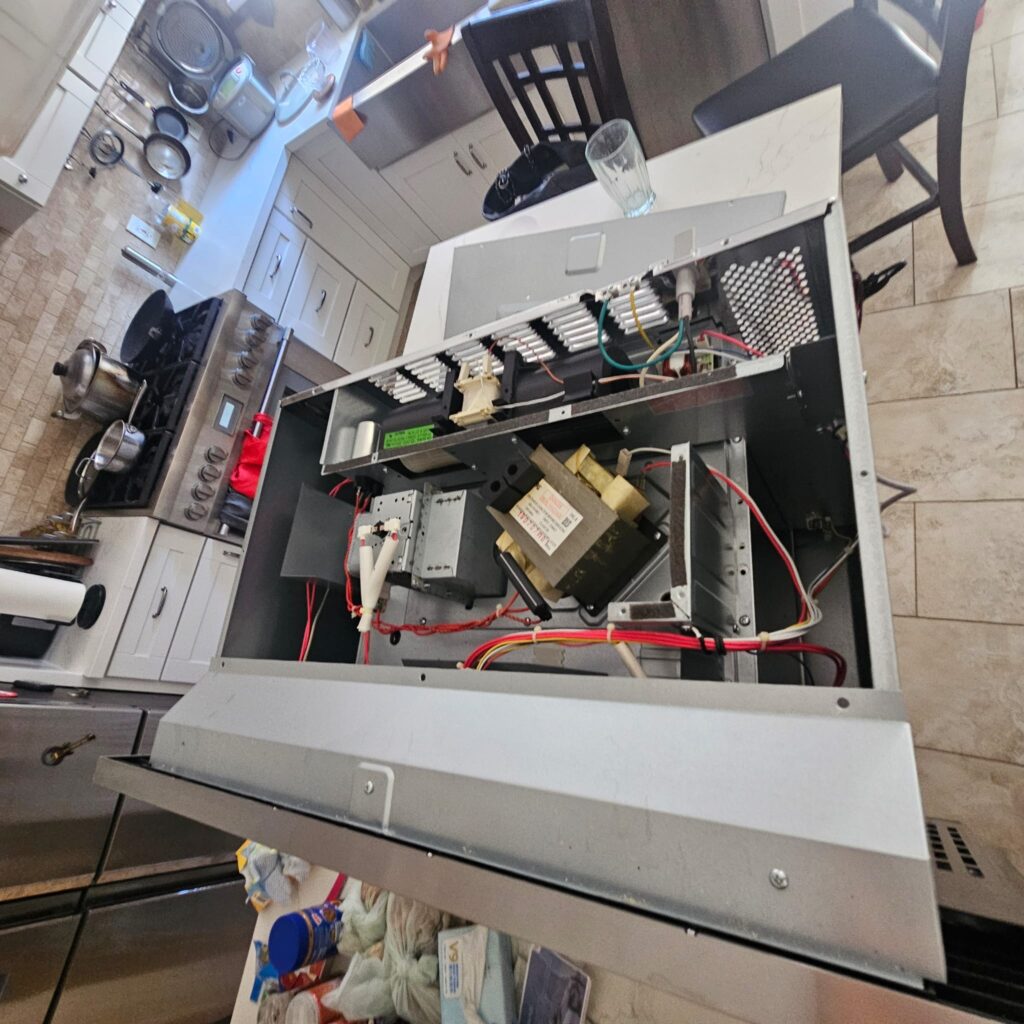
Search “Bosch microwave not heating” or “Bosch microwave not working” and you’ll find the same five or six causes repeated across nearly every appliance-parts site and repair-service page: thermostat, control board, door switch, diode, magnetron. That list is accurate, but it’s also generic, copied from one troubleshooting flowchart to the next, and it rarely includes photos of an actual unit. We recently pulled a Bosch built-in microwave from a Los Angeles kitchen after the homeowner reported it ran normally but stopped heating food. Here’s what the teardown actually showed, including a failure point that most of those lists skip entirely.
Step 1: Confirm the Symptom Before Touching Anything
Before opening a panel, we always narrow down what the appliance is actually doing, since each symptom points to a different part. This is the same troubleshooting logic we use across service calls in Glendale, Burbank, and Pasadena; the symptom tells you where to look before you touch a single screw:
- Turntable spins and light works, but food stays cold
- Panel is completely dead – no lights, no beep
- Loud humming or buzzing during a cycle, with no heat reaching the food
- Breaker trips a few seconds after start
- Grinding or scraping noise near the turntable
On this job, the microwave had power, the light worked, the fan ran, and the turntable spun, but nothing heated. That combination rules out a dead control board or a completely open circuit, and narrows the search to the heating path itself: thermostat, door switch, diode, capacitor, magnetron, or coupler. Getting this narrowing step right before opening anything is what separates a 30-minute diagnosis from a repeat visit; swap the wrong part first, and the customer pays twice: once for a part that wasn’t broken, and again for the actual fix.
Symptom vs. Likely Cause
| Symptom | Likely Cause | Recommended Action |
|---|---|---|
| Runs normally, no heat at all | Diode, capacitor, or magnetron | Technician diagnostic, do not open housing |
| Humming but not heating | Failing diode or capacitor drawing current with no output | Technician diagnostic, treat as high-voltage fault |
| Turns on, shuts off within seconds | Thermostat trip or ventilation blockage | Check vent clearance first, then call for diagnosis if it persists |
| Heats some foods but not others / uneven heating | Worn or corroded stirrer coupler | Technician inspection, often a low-cost fix |
| Completely dead, no display | Power supply, fuse, or control board | Check breaker and outlet first, then call for diagnosis |
| Sparking or arcing inside cavity | Metal contact, damaged waveguide cover, or debris | Unplug immediately and stop use; call a technician |
Step 2: The Usual Suspects
Every one of these can produce a “runs but doesn’t heat” symptom, and a technician typically checks them in this order:
- Thermostat – trips if the unit has been overheating, cutting power to the heating circuit even though everything else still runs. Common on units placed in tight cabinet cutouts with poor ventilation clearance, which we see often in condo and townhome kitchens across LA, from Sherman Oaks to North Hollywood.
- Door switches – Bosch units use two or three in sequence; if one loses continuity, the microwave will often still power on but block the high-voltage circuit as a safety measure. These switches tend to wear together, so a technician usually tests and, if needed, replaces all of them as a set.
- High-voltage diode – converts AC to the DC power the magnetron needs. A failed diode leaves everything else running normally with zero heat output, and is one of the more common causes behind a Bosch microwave humming but not heating.
- High-voltage capacitor – works with the diode to step up voltage; a failed capacitor produces the same “runs, no heat” symptom.
- Magnetron – generates the microwave energy itself. This is the part most homeowners assume is broken first, and the most expensive to replace.
- Control board – less common, but a partial board failure can silently disable the heating relay while leaving the display and turntable working.
A technician moves through this list with a multimeter, checking continuity and resistance at each stage, rather than replacing parts on a guess. That’s the difference between a diagnosis and a shopping list, and it’s usually the difference in final cost too.
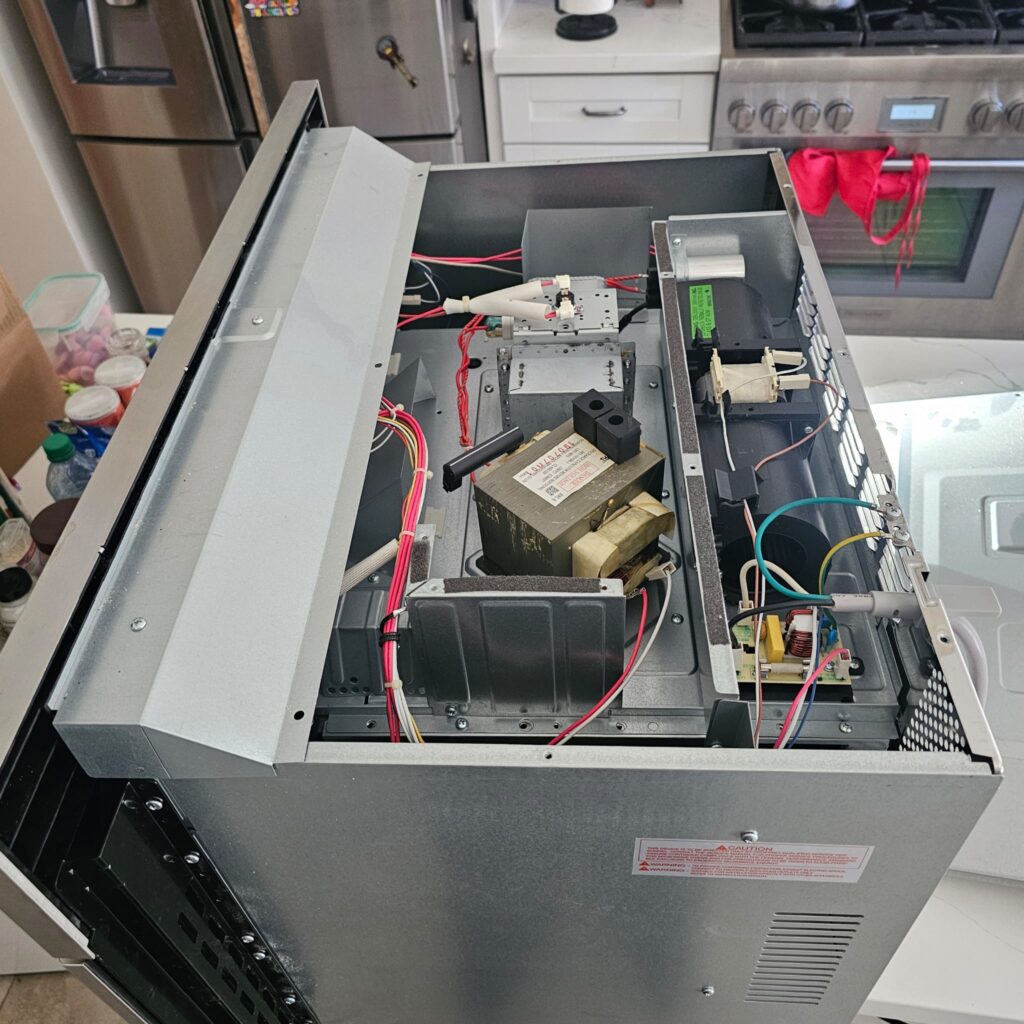
Safety note: the capacitor can hold a lethal charge even after the microwave has been unplugged for hours. This is the main reason we tell Los Angeles homeowners not to go past the door switch and exterior on a DIY repair, it’s one of the few “simple-looking” appliances that is genuinely dangerous to open.
Step 3: What Was Actually Wrong
We tested the diode, capacitor, thermostat, and magnetron in sequence. All four checked out fine, which is unusual, since one of those four accounts for most “Bosch microwave not working” calls. The door switches also tested with proper continuity. That left one part most troubleshooting guides don’t even list: the stirrer coupler.
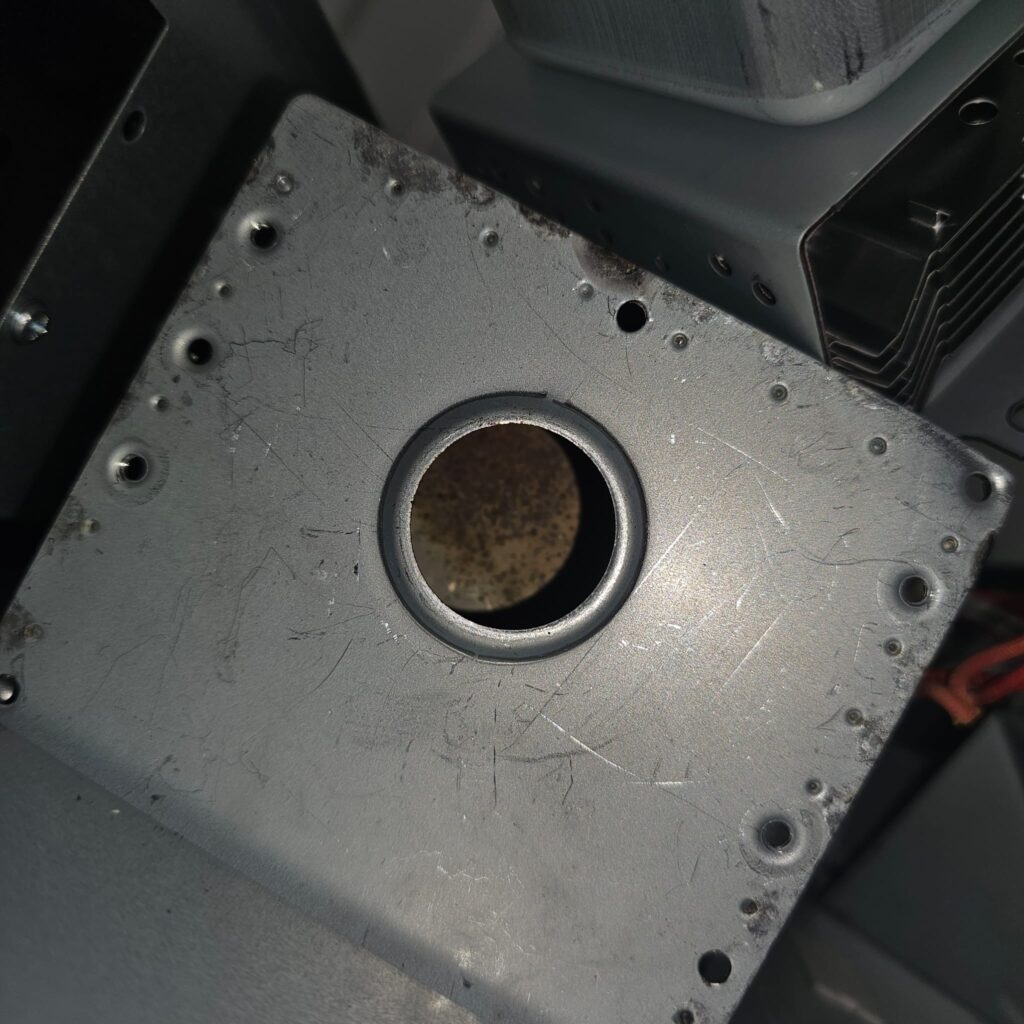
The stirrer coupler spins a small fan that scatters microwave energy evenly through the cavity. Years of steam and food splatter had corroded the coupling point badly enough that the stirrer fan had stopped turning, effectively trapping the microwave energy near the magnetron instead of spreading it through the cavity. From the outside, that reads almost identically to a dead magnetron: light on, turntable spinning, no heat, which is exactly why it gets missed. It’s also one of the least expensive parts in the entire unit, which made this a much cheaper fix than the homeowner had budgeted for after searching online and assuming magnetron replacement.
This is a pattern worth flagging for anyone troubleshooting a Bosch built-in microwave in a humid or steam-heavy kitchen: coupler corrosion builds up gradually, so the heating loss is often gradual too; food that used to take two minutes starts taking three, then four, before the unit stops heating entirely. Homeowners who catch that gradual slowdown early and get it looked at often avoid the situation entirely, since the coupler is inexpensive to replace before it seizes completely.
Repair vs. Replacement by Microwave Age
Not every failed microwave is worth repairing, and age is the biggest factor in that decision:
| Microwave Age | Recommendation | Cost Consideration |
|---|---|---|
| 0–5 years | Repair, almost always | Parts are usually still available and inexpensive relative to unit cost |
| 5–8 years | Repair for switches, thermostat, coupler, fuse | Worth it unless the failure is magnetron or control board on a lower-tier model |
| 8–10 years | Compare repair quote to replacement cost | Magnetron or transformer repair can approach 40–50% of a new unit’s price |
| 10+ years | Replacement usually more practical for major component failure | Built-in cabinet cutout and trim kit costs factor into replacement, not just the unit price |
Built-in models are tied to a specific cabinet cutout, so a like-for-like swap isn’t always simple; different manufacturers and even different Bosch model years can require trim kit adjustments. That installation complexity is one more reason repair tends to be the more practical first option for anything short of a magnetron or control board failure.
Bosch Microwave Repair Cost in Los Angeles
Cost depends entirely on which part failed:
- Door switch, thermostat, or fuse – lowest cost, usually same-visit
- Stirrer coupler or turntable motor – low-to-moderate cost, same-visit in most cases
- High-voltage diode or capacitor – moderate cost
- Magnetron replacement – higher cost, and model-dependent
- Control board – typically the highest single-part cost
CityFix Appliance diagnoses first and quotes the exact part before starting work, no flat-rate guessing, and no replacing an expensive part on assumption alone.
Common Mistakes That Make This Worse
- Running it empty to “test” it – an empty cavity with no food or liquid to absorb the microwave energy can damage the magnetron on a unit that was otherwise fine.
- Ignoring sparks or arcing – even a small spark is a sign to stop using the unit immediately, not a wait-and-see situation.
- Blocking the vents – built-in units need airflow around the cabinet cutout; blocked vents accelerate thermostat trips and can shorten component life.
- Replacing parts without a diagnosis – ordering a magnetron based on a symptom match online, when the real cause (as in this repair) was a $20-range coupler.
- Using incorrect cookware – metal trim, twist ties, or non-microwave-safe containers can cause arcing that looks like a heating fault but is actually cookware damage.
Preventing Future Heating Problems
- Wipe down the cavity and stirrer cover after meals that splatter – steam and grease buildup is what corrodes the coupler over time.
- Keep the vent path clear on built-in units, especially in tighter cabinet installations common in condos and townhomes.
- Address a slow, gradual increase in cook time early – it’s often the first sign of coupler wear, well before the unit stops heating entirely.
- Avoid microwave-safe-adjacent guesswork with cookware – check for the actual microwave-safe label rather than assuming.
DIY vs. Calling a Professional
| Safe to check yourself | Call a professional |
|---|---|
| Door not closing fully / not clicking | No heat despite power and turntable working |
| Breaker for that circuit only (reset once) | Breaker trips repeatedly on restart |
| Turntable roller/tray cleaning | Any work behind the panel or rear housing |
| Checking outlet with another appliance | Buzzing, arcing, sparking, or burning smell |
Frequently Asked Questions
Why does my Bosch microwave run but not heat food?
The most common causes are a failed thermostat, door switch, high-voltage diode, capacitor, or magnetron. A less common but real cause is a corroded stirrer coupler, which can produce the same symptom even when the magnetron is healthy.
Why does my Bosch microwave hum but not heat?
A humming sound with no heat usually points to the high-voltage diode or capacitor drawing current without producing output, or in some cases a failing magnetron. This should be diagnosed with a multimeter rather than assumed.
How much does it cost to fix a Bosch microwave that’s not heating?
Cost depends on the failed part. Switches, thermostats, and couplers are the least expensive repairs and are often completed in one visit. Diode, capacitor, and magnetron repairs cost more, and control board replacement is typically the most expensive single-part repair.
Can I replace the magnetron in my Bosch microwave myself?
It’s not recommended. The magnetron sits next to a high-voltage capacitor that can hold a lethal charge even after the microwave is unplugged, and misdiagnosing the actual cause, as happened in this repair, can lead to replacing a working magnetron unnecessarily.
How do I know if my microwave’s door switch is bad?
A bad door switch often lets the microwave power on and run the turntable and light while blocking the heating circuit as a safety measure. A technician confirms this with a continuity test using a multimeter rather than guessing from symptoms alone.
Is it worth repairing a Bosch microwave or should I replace it?
For units under 8 years old with a switch, thermostat, or coupler failure, repair is usually the more economical choice. For older units with a failed magnetron or control board, replacement is worth comparing since repair costs can approach the price of a new unit.
Why does my Bosch microwave heat unevenly?
Uneven heating is most often caused by a worn or corroded stirrer coupler, which stops microwave energy from distributing evenly through the cavity, even though the magnetron itself is still generating power normally.
Is it dangerous to open a Bosch microwave that isn’t heating?
Yes. The high-voltage capacitor inside a microwave can hold a lethal charge for hours after the unit is unplugged. Diagnosis and repair past the exterior housing should always be done by a licensed technician.
How long does a Bosch microwave repair usually take?
Most single-part repairs, such as a switch, thermostat, or coupler replacement, are completed in one visit once the part is diagnosed. Repairs requiring a special-order part, like certain magnetron or control board models, may take longer.
The Bottom Line
Most “Bosch microwave not heating” guides give you the same five-part checklist and stop there. In this repair, all five of those usual suspects tested fine, and the actual cause was a corroded stirrer coupler, a part that rarely makes the list but produces an identical symptom. That’s the value of an in-person diagnosis over a generic troubleshooting flowchart: it catches the failure that doesn’t fit the standard pattern, and it prevents paying for a magnetron or control board that was never the problem.
Bosch Microwave Not Heating? Our Los Angeles Techs Can Take a Look.
CityFix Appliance diagnoses and repairs Bosch built-in and countertop microwaves across Los Angeles, Glendale, Burbank, Pasadena, and the surrounding San Fernando Valley. We test before we quote, so you’re never paying to guess. Call or book a repair online – most single-part repairs are completed the same visit.