Quick answer: A Bertazzoni oven not heating is caused by one of seven things, in order of frequency: a failed igniter (gas models, needs 3.2–3.6 amps to open the safety valve), a burned-out bake or broil element, a faulty RTD temperature sensor (~1,080 ohms at room temp), a control board relay failure, a blown thermal fuse, a failed thermocouple/bimetal valve (European-standard gas models), or a door-lock fault after self-clean. A hard reset (breaker off 5 minutes) fixes software hangs, not dead parts.
Why Bertazzoni Ovens Fail Differently Than Standard Ovens
A budget oven runs one circuit: power in, one coil, one dial. A Bertazzoni Master, Heritage, or Professional Series range runs a microprocessor-driven control board that checks thermal resistance, door latch position, fan speed, and gas valve position before anything fires. One bad reading and the board shuts the system down rather than risk a fault cascading further, which is also why the symptom you see rarely points straight at the broken part.
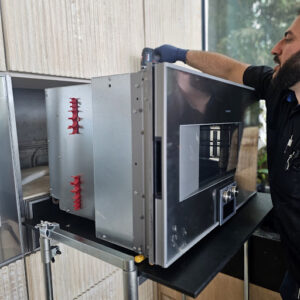
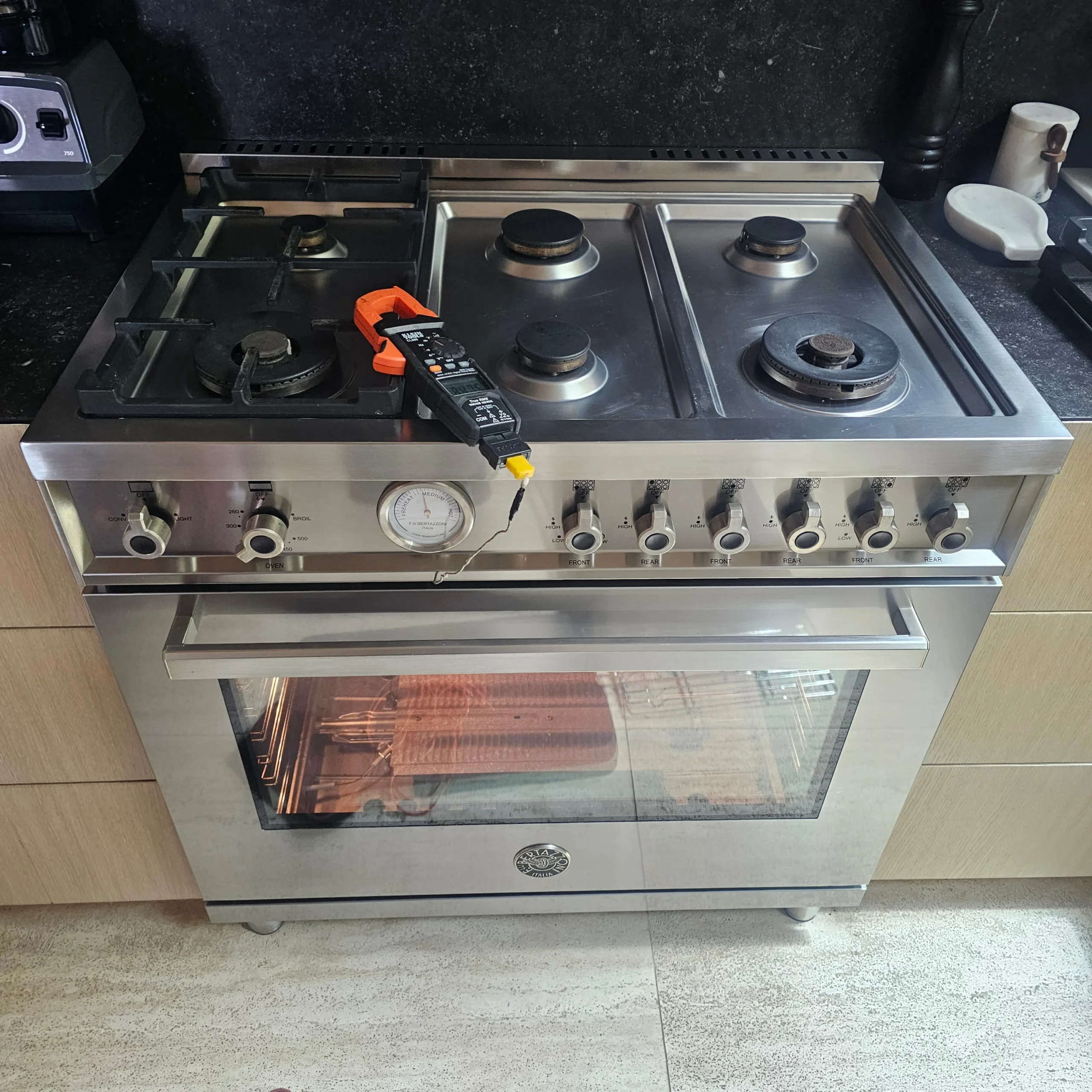
Figure 1: Clamp meter reading the igniter circuit on-site, confirms whether the igniter draws the 3.2–3.6 amps needed to open the gas safety valve.
Gas Models vs. Electric/Dual-Fuel Models
- US-standard gas models — hot-surface igniter draws current to light the burner and open an electric gas safety valve.
- European-standard gas models — use a thermocouple or bimetal strip instead; a small voltage (15–30mV) from the heated thermocouple tip holds the valve open. Common on Italian-sourced Bertazzoni ranges and often missed by US-trained technicians.
- Dual-fuel / electric models — bake, broil, and (on convection units) a third ring element behind the fan, each failing independently.
If the cooktop lights fine but the oven itself won’t heat, the fault is almost always isolated to the oven’s own ignition or heating circuit, not the whole-unit gas supply.
The 7 Root Causes of a Bertazzoni Not Heating
1. Failed Igniter (Gas Models)
Needs 3.2–3.6 amps to trigger the gas safety valve. Igniters degrade with age; one can still glow bright orange-white and fail to pull enough current. Below 3.0A on a clamp meter, it’s too weak, even if it looks fine.
2. Burned-Out Bake or Broil Element
Magnesium oxide insulation inside the element sheath wears thin from heat cycling until the filament breaks or shorts. A visible burn hole or blister confirms failure, but an internal wire break isn’t always visible, so a resistance test is the only reliable check.
3. Faulty RTD Temperature Sensor
Should read ~1,080 ohms at 70°F. Below 900 or above 1,200 ohms confirms failure. A drifted sensor can under-heat, over-heat, or abort the cycle mid-bake instead of stopping heat outright.
4. Control Board Relay Failure
The relay switching power to the bake element can fail open; the element and sensor both test fine, but the oven still won’t heat because the board isn’t sending power to the circuit at all.
5. Blown Thermal Fuse
One-time-use fuse protecting against overtemperature events, often blown after a high-heat self-clean cycle. Cuts power to the whole heating circuit and must be physically replaced.
6. Failed Thermocouple or Bimetal Valve (European-Standard Models)
Thermocouple output below 12mV under flame means replacement. On bimetal-strip models: hold the knob in for 30+ seconds after lighting; if the flame dies every time you release it despite a strong flame, the bimetal has fatigued, and the whole valve needs replacing.
7. Door-Lock Fault After Self-Clean
Let the oven cool for 30+ minutes, then cycle the power at the breaker and wait 5 minutes before retrying.
Error Codes to Check First
| Code | Meaning |
|---|---|
| F1 | Runaway temperature or sensor short fault |
| F2 | Open sensor circuit (RTD disconnected or failed) |
| F30 | Relay fault; can latch and block operation even after the part is replaced until the board is reset |
| E4 / E6 | Newer-model equivalents of sensor/relay faults, sometimes tied to self-clean |
| Door-Locked | Lockout following self-clean, not a component failure |
Document the exact code and which mode it appeared in (bake, broil, convection, self-clean) before calling, it often determines which parts a technician brings on the first visit.
Figure 2: Full resistance-testing kit staged before component-level diagnosis. No shortcuts on a premium range.
Why Is My Gas Oven Not Heating Properly?
Cooktop lights fine, oven won’t reach temperature, almost always the oven’s own igniter, safety valve, or (on European-standard models) the thermocouple/bimetal assembly. Gas line pressure drops at the regulator are a secondary possibility, ruled out with a manometer test.
Why Is My Oven Not Heating Up Fast?
A slow climb usually means a partial element failure or a stalled convection fan, not total failure. If the primary bake element is dead but a secondary convection ring still runs, you get weak, uneven heat, often mistaken for a thermostat issue.
Hard Reset Protocol
- Locate the dedicated circuit breaker for the range at your main panel.
- Flip it fully OFF.
- Leave power disconnected 5 minutes minimum, discharges residual capacitive memory on the control board.
- Flip it back ON and clear any lingering error codes.
Fixes software communication hangs. Will not fix a dead igniter, burned element, blown thermal fuse, or failed sensor.
Step-by-Step Professional Diagnostic Process
- Record model and serial number — ID plate inside the door frame or storage drawer. Wrong part orders cost 2–4 weeks on Italian-sourced components.
- Power isolation and safety check — disconnect at breaker, confirm zero residual current at the terminal block.
- Grounding audit — verify chassis grounding is secure and code-compliant.
- Component resistance analysis — bake element, broil element, igniter amperage, RTD sensor, checked against factory schematics.
- Gas line integrity test — safety valve, regulator, burner orifices traced electronically.
- Final calibration and heat verification — full preheat cycle, verified with an independent digital thermometer.
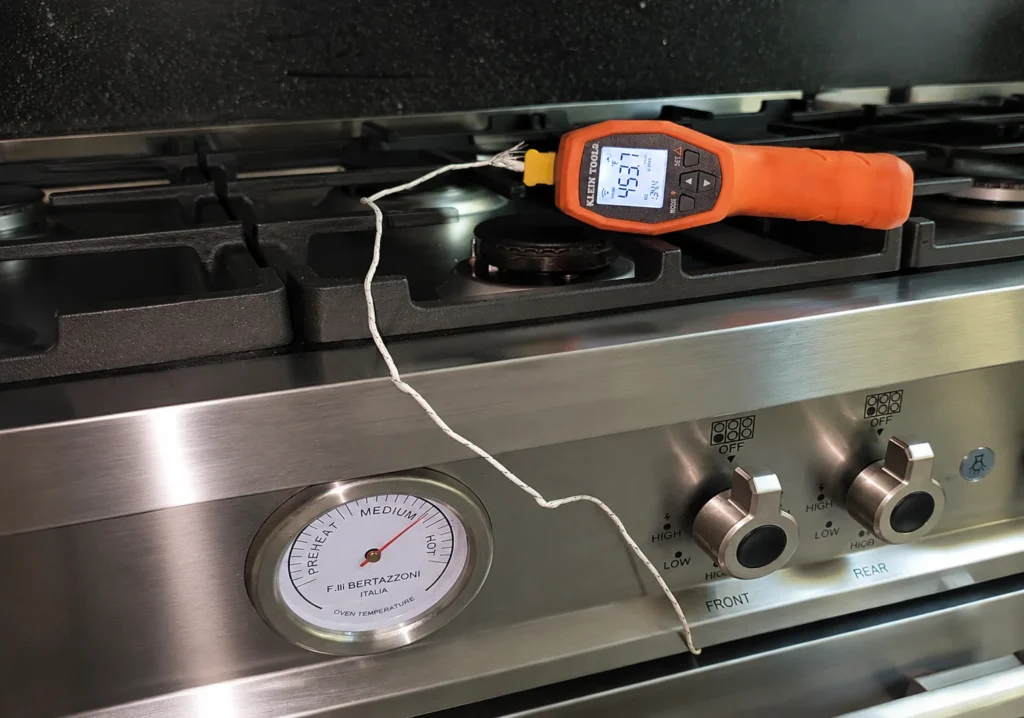
Figure 3: Independent digital probe verified against the factory gauge during final calibration, confirming the repair actually holds accurate heat.
Repair Cost Breakdown
Component-level repairs run roughly $150 for a straightforward igniter, sensor, or element swap, up to $1,000+ for control board replacement, that gap is almost always a misdiagnosis or mismatched part, not the complexity of the original fault. Typical fix time for a confirmed single-part repair: 1–2 hours once the correct OEM part is on hand.
DIY vs. Professional: When to Call
Safe to check yourself: visual inspection of the bake element, reading/documenting error codes, confirming the breaker hasn’t partially tripped, running the hard reset above.
Needs a certified technician: any resistance test on the igniter/sensor/elements, control board relay or thermal fuse replacement, any repair on a unit still under Bertazzoni factory warranty.
Frequently Asked Questions
Why is my Bertazzoni oven not heating up?
Most commonly a failed heating element (electric/dual-fuel models) or a degraded igniter (gas models). Both cause the control board to block heat delivery to protect the rest of the circuit.
Why is my oven working but not heating up?
If the display and cooling fans run but there’s no heat, the board is fine; the power path to the element or gas valve is interrupted, usually a blown thermal fuse, a stuck-open relay, or a dead igniter.
What can I do if my oven isn’t heating up?
Confirm the breaker hasn’t partially tripped and run the hard reset protocol. If it still won’t heat, skip DIY disassembly on a warrantied unit and get a resistance test from a Bertazzoni-trained technician before ordering parts.
What is the life expectancy of a Bertazzoni range?
15 to 20 years with proper maintenance. Using genuine OEM parts for any repair is the single biggest factor in reaching the higher end of that range.
Why is my gas oven not heating properly?
If the cooktop lights but the oven won’t reach temperature, suspect a weak igniter, failed safety valve, or a degraded thermocouple/bimetal strip on European-standard models. Gas line pressure at the regulator is a secondary possibility.
Why is my oven not heating up fast?
A slow preheat usually points to a partial element failure or a stalled convection fan, not a dead component, easy to mistake for a thermostat problem when it’s really one working element compensating for a failed one.
Why LA Homeowners Call CityFix Appliance
- 15+ years serving Los Angeles County
- 5,000+ completed repairs on luxury and premium brands
- 5/5 rating across local reviews
- 98% same-visit fix rate, fully stocked trucks
- $69 flat-rate diagnostic, credited toward your repair
- 90-day parts & labor warranty, in writing
Service area: Glendale, Burbank, Pasadena, Studio City, Beverly Hills, Sherman Oaks, and surrounding LA County.
Book a Diagnostic
Call before noon and we’re usually at your door before dinner. Call [(818) 937-1818] or book online to get your Bertazzoni back to full temperature.