What to Do When Your Gas Stove Stops Lighting
You turn the dial, hear continuous clicking, and catch the sharp scent of fuel-yet no flame catches. If you are staring down a stubborn cooktop in your Los Angeles or Glendale kitchen, don’t worry. This is easily one of the most common service requests we handle at CityFix, and most of the time, the fix takes less than ten minutes.
The trouble with generic online guides is that they toss out one-size-fits-all checklists without addressing what your stove is actually doing. A burner clicking endlessly requires an entirely different troubleshooting step than one that sits dead silent. Similarly, a single failing burner points to an isolated part, whereas all burners dropping offline at once indicates a system-wide electrical or fuel supply snag. This field guide walks through those precise differences so you can pinpoint the real culprit safely.
If you smell gas strongly and the burner will not light: Turn the knob to OFF immediately. Do not try to re-light it. Do not flip light switches or use your phone near the stove. Open windows, leave the area, and if the smell persists after 5 minutes, call SoCal Gas at (800) 427-2200. A persistent gas leak is not a DIY situation, it’s an emergency.
Gas Stove Diagnostic Table: Match Your Symptom to the Fix
Select your cooktop’s specific behavior to apply the direct field-tested solution.
| Your Exact Symptom | Most Likely Cause | Quick DIY Fix | Action Route |
|---|---|---|---|
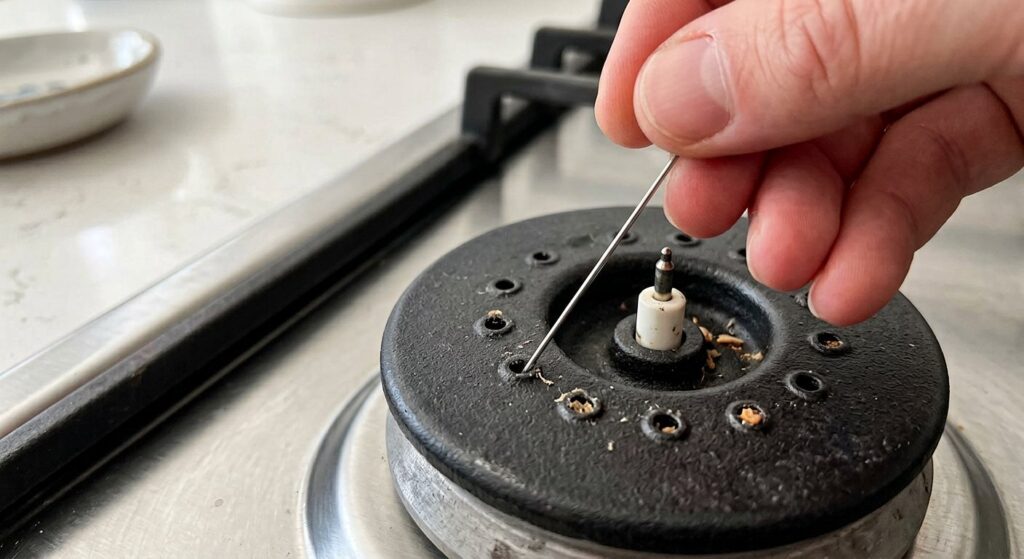
| Clicking, gas stove won’t light but smell gas | Clogged pilot port holes or an electrode spark too weak to ignite gas vapor. | Turn knob OFF; let gas clear; gently clear the pilot port using a straight needle. | DIY First Call pro if spark stays weak |
| Gas stove not lighting but clicking (no gas smell) | Manual brass gas valve closed or an internal safety solenoid valve failure. | Verify the manual gas valve behind the range is parallel to the incoming pipe line. | Pro Needed Manifold pressure check |
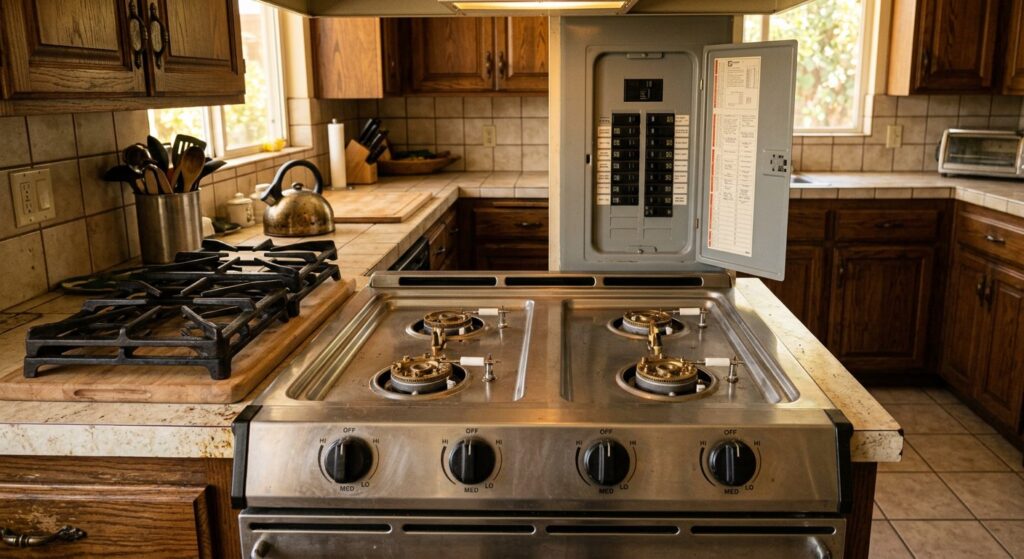
| Gas stove igniter not sparking at all (silent) | Tripped kitchen GFCI/breaker, loose switch harness, or dead spark module. | Check electrical panel; reset GFCI counter outlet; verify 120V wall plug. | Pro Needed $150–$250 module fix |
| Gas stove igniter not sparking after cleaning | Liquid degreaser or cleaning water trapped inside the ceramic igniter well. | Wipe down metal; warm gently with a hairdryer for 2 mins; let air-dry for 2-3 hours. | DIY Only No parts required |
| One burner dead, but other burners light | Port obstruction, misaligned cap, or cracked white porcelain ceramic stem. | Clear port channel; swap round burner cap with a working burner to check level. | Pro Needed If ceramic tip is cracked |
| Burner knob turns loose or slips without clicking | Flattened, collapsed, or damaged metal knob spring tension clip inside sleeve. | Pull knob straight off; bend tension clip outward using a micro flathead screwdriver. | DIY Only $10–$25 knob clip |
One Burner Not Lighting vs. All Burners – What’s the Difference?
Whenever a homeowner calls our dispatch line, this is always my first question: “Is it just one dead burner, or did every burner stop lighting together?” That single answer cuts diagnostic time in half.
If Only One Burner Won’t Light (Gas Stove Burner Not Working But Others Are)
When three burners fire up with crisp blue flames while one remains cold, you can immediately rule out main line gas interruptions, street shutoffs, or a tripped household circuit breaker. The defect sits right at that individual burner assembly:
- That burner’s gas port holes: Boiled-over sauces and cooking oils run down into the burner base, charring the tiny pilot notch facing the electrode.
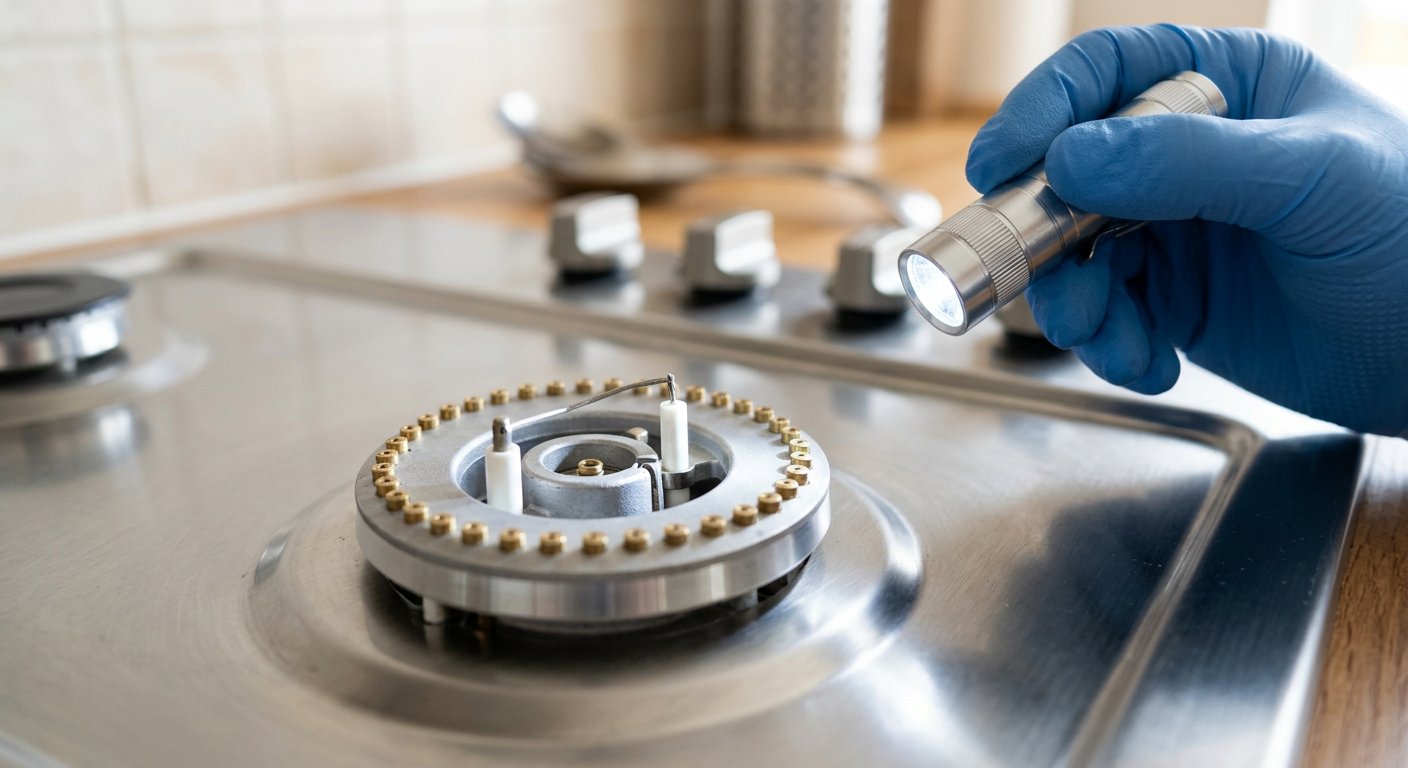
- That burner’s igniter: Look closely for hairline fractures on the white porcelain insulator. Any crack allows high-voltage current to bleed harmlessly into the stove frame instead of arcing across the gas port.
- That burner’s cap alignment: If the cast-iron cap is slightly tilted, gas spills out before gathering enough density around the spark tip.
- Frayed electrode wire: Hidden beneath the cooktop, the single lead wire running from the spark box to that burner may have burned through or disconnected.
- How to fix a loose gas stove knob spring: If the dial feels mushy or spins freely without engaging the ignition switch, the flat spring clip inside the knob sleeve has lost tension. Pull the knob straight off the valve stem. If the metal clip is squashed, gently pry the tab outward with a micro flathead screwdriver to restore grip. If the plastic shaft is split down the side, grab an OEM replacement knob so it can depress the internal ignition switch fully.
Field Diagnostic Tip: Take the burner cap from a working burner and place it on the dead burner. If it now lights up, your original cap was warped or misaligned. If it still refuses to ignite, you are dealing with a clogged port hole or an electrode circuit defect.
If All Burners Stopped Lighting
When every single burner fails at the same time, localized burner clogs are out of the question. You are dealing with an overall electrical or gas supply failure. Check these in order:
- Circuit breaker & GFCI: Electronic spark igniters need 120V household electricity. If a counter GFCI outlet or breaker is tripped, no burner will click.
- Gas stove igniter not sparking after cleaning: If you wiped down the range recently, cleaning spray or rinse water may have seeped into the ceramic wells and grounded out the spark. Give the unit 1 to 2 hours of drying time.
- Gas stove not lighting but clicking (no gas smell): If every igniter sparks like normal but you detect no gas odor whatsoever, fuel is cut off before the manifold. Confirm the brass shutoff valve behind the appliance wasn’t bumped shut.
- Gas stove won’t light but smells gas: If you detect a strong sulfur smell across the range with zero spark sounds, the ignition switch system has failed while fuel valves remain open. Turn all knobs to OFF immediately.
- Central spark module failure: If the wall outlet has live power and the range is dry, but no burner clicks when turning any dial, the central spark module has shorted out and requires a technician’s replacement. Read our dedicated Stove Repair Guide to learn how modules are tested.
Step-by-Step: How to Fix a Gas Stove That Won’t Light
Follow these steps in order. Most gas stove lighting problems are resolved by Step 3 or 4.
- Cut Electrical Power and Verify Fuel Safety: Turn all dials to OFF. If you smell gas, open windows and let the room clear before doing anything else. Unplug the range power cord from the wall outlet.
- Disassemble the Burner Hardware: Lift away the heavy cast-iron grates, remove the round burner caps, and lift the aluminum or brass burner heads straight off the surface.
- Inspect the Ceramic Igniters: Check the white ceramic insulator on each burner for micro-cracks, dark carbon trails, or a broken metal electrode tip. A cracked igniter will continually ground out and requires replacement.
- Ream the Pilot Port Channels: Locate the small ignition channel facing the white electrode pin. Insert an unbent paperclip or sewing needle straight through the opening to dislodge hardened carbon. Never use wooden toothpicks, which can snap off and plug the orifice permanently.
- Clean the Spark Electrode Area: Scrub away burnt oil and grease around the spark needle and ceramic base with a dry nylon toothbrush. Wipe the assembly clean using 90%+ isopropyl alcohol on a lint-free cloth.
- Ensure Complete Drying: If cleaning water or liquid degreaser entered the burner wells, let them air-dry for at least 30 to 60 minutes. Damp igniters simply will not spark.
- Realign the Burner Cap: Place the burner base flat into its locator pins, then place the round cap directly on top. Tap the edges; it must rest firmly and level without rocking or sliding.
- Test the Ignition: Plug the appliance back into power, press the knob, and turn it to LITE. You should see an immediate blue spark snap against the burner port, followed by instant blue flame ignition.
Why Is My Gas Oven Not Lighting? (Surface Burners Work, But Oven Doesn’t)
Homes across Glendale, Burbank, Pasadena, and historic neighborhoods throughout Los Angeles expose gas appliances to unique local wear and tear. A significant portion of residences in these areas were built between the 1920s and 1970s, which means their original black iron supply pipes have endured decades of use. Over time, this aging plumbing sheds interior rust flakes and pipe scale that travel directly toward your range. This sediment frequently accumulates inside the stove’s internal pressure regulator, restricting fuel delivery and causing persistent burner sputtering, delayed ignition, or noticeably weak flames.
Environmental factors and kitchen configurations in Southern California create further complications. The region’s dry, warm climate causes frequent thermal expansion and contraction in ceramic components, leaving igniters over five years old riddled with microscopic hairline cracks that leak electrical voltage. Additionally, many older Spanish-style homes and classic apartments operate unvented range hoods that recirculate aerosolized cooking fats back into the kitchen, coating internal knob switches in sticky grease. In upscale residences featuring commercial-style ranges like Wolf, Viking, or Thermador, this thin greasy film across sensitive auto-reignition sensors is often all it takes to trigger endless, false sparking during cooking.
When to Call a Professional for Gas Stove Repair
While clearing carbon buildup from a clogged port is a simple DIY task, certain electrical and fuel-system failures demand professional diagnostic tools. Fractured porcelain igniters cannot be repaired with adhesives and require exact OEM replacements to prevent continuous electrical arcing. More critically, if you smell raw gas while all control knobs are set firmly to OFF, you are likely dealing with a compromised flex connector, cracked manifold, or failing regulator. In this situation, shut off the manual gas valve behind the unit immediately and arrange a dedicated gas stove repair service in Glendale and Los Angeles to restore fuel containment.
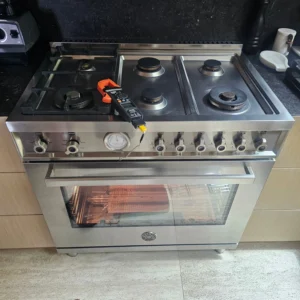
Safety concerns also extend to improper combustion and sealed electronic systems. A persistent lazy yellow or floating orange flame after cleaning indicates incorrect air-fuel blending, which creates hazardous carbon monoxide inside living spaces. Furthermore, when all surface burners remain silent despite live 120V power, or when an oven refuses to heat because its silicon carbide glow bar cannot draw the requisite 3.2 to 3.6 amps, testing requires specialized multimeters. At that stage, professional diagnostic equipment is the only safe way to pinpoint failing switch harnesses, safety valves, or central spark modules.
Gas Stove Still Not Lighting? We’ll Fix It Today.
CityFix delivers fast, dependable gas range, cooktop, and wall oven repairs across Glendale, Burbank, Pasadena, and the broader Los Angeles County area. Our factory-trained specialists carry genuine OEM components directly in their service vans for all major residential and luxury brands, including Wolf, Viking, Thermador, GE Monogram, Bosch, Dacor, and Whirlpool. Every call is backed by transparent diagnostic pricing, no service fee when you complete the job, and a comprehensive 90-day parts and labor warranty.
Frequently Asked Questions
Is it safe to use a gas stove that keeps clicking but won’t light?
No – it’s not safe to keep using a gas stove that clicks without igniting. Each click releases unburned gas into your kitchen. If the flame doesn’t catch within 5 seconds, turn the knob off, wait 5 minutes for gas to dissipate, and open a window. Persistent clicking without lighting usually means a clogged gas port, a faulty igniter, or a wiring issue, all of which need attention before you cook again.
Why is only one burner on my gas stove not lighting?
When only one burner won’t light, but the others work fine, the problem is isolated to that burner. The most common causes are food debris clogging that burner’s gas ports, a cracked or worn igniter, moisture trapped under the cap, or the burner cap sitting unevenly. Clean the ports with a paperclip and dry thoroughly. If it still won’t light, that burner’s igniter may need replacing.
Why are all burners on my gas stove not lighting at the same time?
When all burners stop lighting simultaneously, the problem is systemic, not individual burner issues. Check: Was the stove recently cleaned (moisture on igniters)? Is the circuit breaker tripped? Is there a gas supply interruption (does the oven work)? If none of these apply, the spark module has likely failed and requires professional replacement.
How much does it cost to fix a gas stove igniter?
In the Los Angeles and Glendale area, igniter replacement costs $150–$250, including parts and labor. If the spark module is the issue, expect $200–$350. Simple fixes like cleaning clogged ports cost nothing if done yourself, or a service call fee if a technician handles it. At CityFix, there’s no service call fee when you proceed with the repair.