
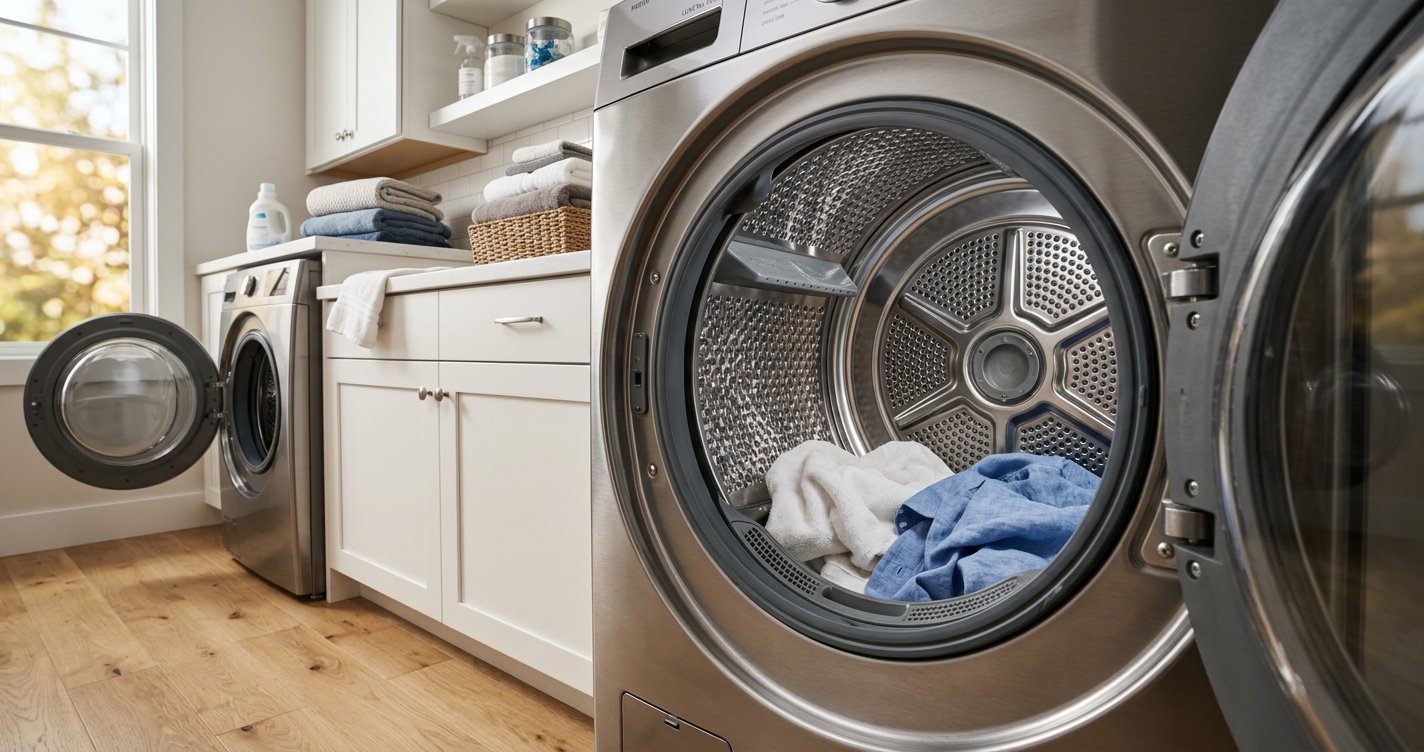
You go to toss a load of laundry in the dryer, and something feels off. You spin the drum by hand, and it barely moves, or worse, it’s completely frozen in place. That’s not normal. A dryer drum should rotate freely with just a gentle push. When it doesn’t, something inside has failed, and running the machine anyway risks burning out the motor, starting a fire, or turning a $150 repair into a $600 one.
A dryer drum that’s difficult or impossible to turn by hand is almost always caused by one of these problems:
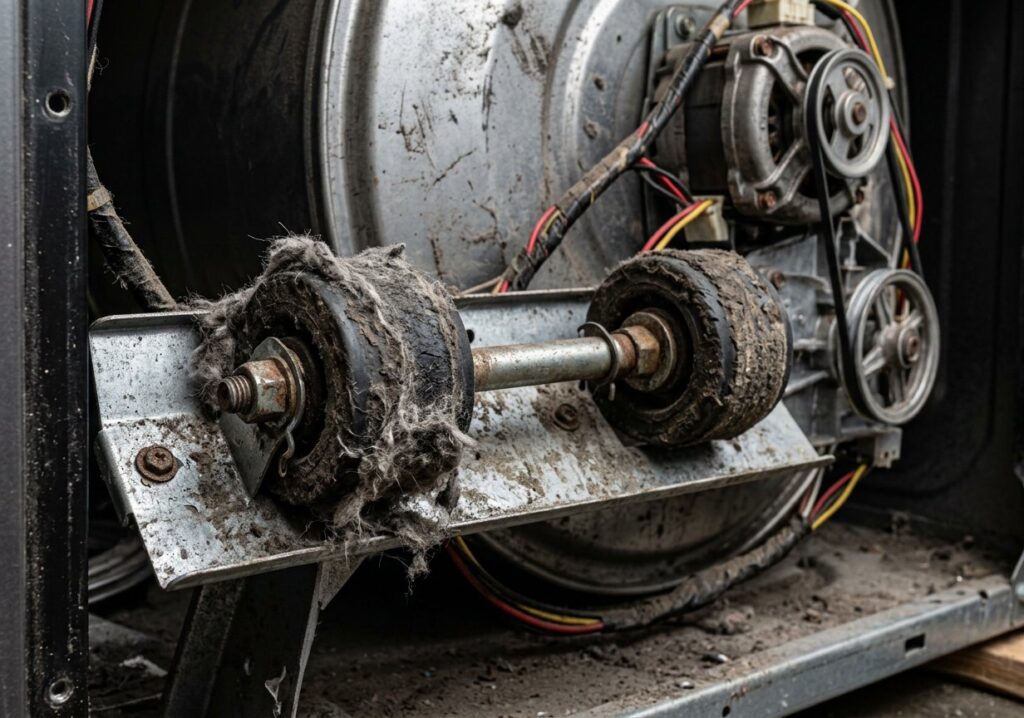
- Worn drum support rollers — the most common cause; rubber wheels seize up from lint, heat, and age
- Seized idler pulley — the pulley that keeps belt tension fails, binding the entire drive system
- Failed drum bearing or worn drum glides — bare metal scraping against metal creates heavy resistance
- Jammed blower wheel — lint buildup or a foreign object locks up the exhaust fan, connected to the same motor shaft
- Foreign object trapped between drum and housing — a sock, bra wire, or coin wedged in the gap can physically stop rotation
Before opening anything up, remove all clothing from the drum and check the drum edges for trapped items; these two quick checks alone solve the problem more often than you’d expect.
Safety First: Always unplug the dryer before inspecting or opening the cabinet. Continuing to run a dryer with a seized drum can destroy the drive belt and burn out the motor entirely.
Signs Your Dryer Drum Has a Mechanical Problem
Here’s how to confirm this is a drum rotation issue and not something else:
| The drum won’t spin at all. Motor hums, but nothing moves | Drum grinds, squeals, or thumps during an active cycle |
| The drum feels stiff or catches when turned by hand with the door open | Burning smell during operation, Friction heat from seized parts |
| Clothes not drying. Heat works fine, but the drum barely moves | Loud bang at startup, then stops. Belt snapped under load |
Any of these tells you the drum drive system has failed somewhere. Don’t ignore them. In Los Angeles, where many homes run dryers in enclosed laundry closets with limited airflow, friction heat from a seized component is a legitimate fire hazard.
5 Main Causes of a Dryer Drum That Won’t Turn Easily
1. Worn Drum Support Rollers
This is the number one cause. Most dryers use 2 to 4 drum support rollers, small wheels made of rubber or nylon, that the drum rests on and rolls across as it spins. Over time, lint and heat cause the bearings inside these rollers to seize up completely.
When drum rollers wear out, you’ll typically hear a loud thumping sound during operation before the drum eventually gets hard to turn. By the time rotation is stiff or impossible, the rollers have usually fully seized.
- Brands most commonly affected: Whirlpool, Maytag, Samsung, LG, Kenmore
- Sound: Rhythmic thumping or rumbling
- Feel: Drum catches or stutters with every rotation
2. Seized Idler Pulley
The idler pulley maintains tension on the drive belt. When the idler pulley’s bearing fails, it binds up and makes it incredibly difficult for both the belt and drum to move, essentially locking the drive system.
- Sound: High-pitched squealing before full failure
- Feel: Drum is stiff with noticeable resistance in one direction
- Risk: A seized idler pulley will quickly shred the drive belt if the dryer keeps running
3. Worn Drum Glides or Drum Bearing
The drum rests on small plastic or felt glides at the front and a bearing at the rear center. When glides wear down entirely, bare metal scrapes against metal, creating heavy, grinding resistance. A seized rear drum bearing creates the same effect, usually with a burning smell.
- Sound: Grinding or metal-on-metal scraping
- Feel: Resistance is constant throughout the rotation, not rhythmic
- Warning: A burning odor means stop the dryer immediately
4. Jammed Blower Wheel
This one surprises a lot of homeowners. The blower wheel (exhaust fan) at the back or bottom of the dryer is connected to the same motor shaft that drives the drum. If debris or excessive lint jams the blower wheel, it can make the entire system hard or impossible to rotate, even though the drum itself is fine.
- Also caused by: A sock or small garment that slipped through the lint trap and lodged in the blower housing
- Sound: Rattling or a sudden stop during a cycle
- Check: If your dryer stopped exhausting hot air before the drum got stiff, start here
5. Foreign Object Trapped Between Drum and Housing
A bra underwire, coin, hair clip, or bunched-up sock can wedge itself into the gap between the drum’s edge and the dryer cabinet, physically blocking rotation.
- Sound: Scraping or intermittent knocking
- Check first: Run a flashlight along the front and rear drum edges before opening the cabinet. This is the easiest fix of all five causes
- Fix: Remove the object (sometimes accessible through the door seal), and the drum rotates freely again
Motor Failure (Less Common): If the motor itself seizes internally, the whole drive system locks up. Signs: motor hums with no drum movement + electrical burning smell. This is more expensive but still worth repairing if the dryer is otherwise in good shape.
Before you call anyone, run through these checks. Some are safe for any homeowner to do.
Step-by-Step: How To Troubleshoot a Dryer Drum That Won’t Turn
1. Unplug the Dryer – Non-Negotiable
Unplug the dryer from the wall before touching anything. For gas dryers, also shut off the gas supply valve. Never work on a dryer that’s connected to power.
2. Turn the Drum By Hand – Your First Diagnosis
Open the dryer door and try spinning the drum slowly. This single test narrows everything:
| What you feel | Likely cause |
|---|---|
| Completely locked | Seized bearing, locked roller, or motor failure |
| Moves with resistance & grinding | Worn rollers or damaged glides |
| Spins freely but won’t “catch” | Belt broken or off the pulley |
3. Listen for Sounds (5–10 Seconds Max)
Have someone power the dryer briefly while you listen from the side:
| Sound | Indicates |
|---|---|
| Thumping / rumbling | Worn drum rollers |
| Grinding metal sound | Seized bearing |
| Squealing / squeaking | Failing idler pulley |
| Motor hums, nothing moves | Broken belt or seized motor |
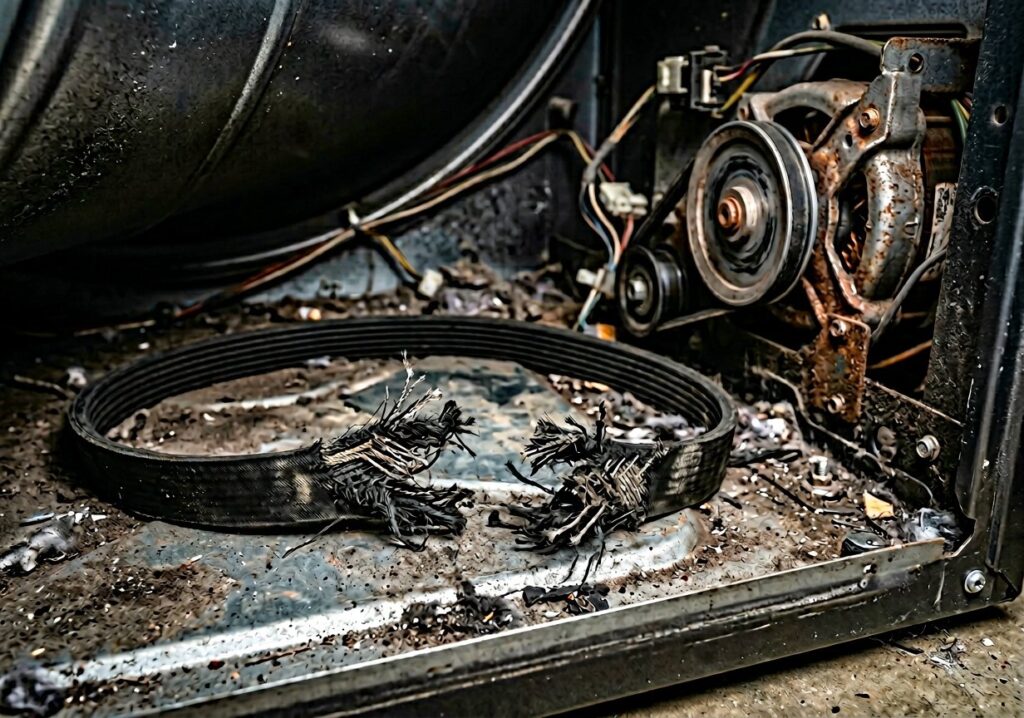
| Bang then silence | Belt snapped at startup |
4. Check for Visible Obstructions
On some dryer models, you can see the belt area through the lint trap opening using a flashlight. Look for:
- A broken belt lying at the bottom of the cabinet
- Debris (socks, small garments) caught between the drum and the cabinet
- Obvious broken or detached components
5. Access the Cabinet (Advanced DIY – Whirlpool / Maytag / Kenmore)
If you’re comfortable with basic appliance repair:
- Remove the lint trap and unscrew the two screws inside the lint trap housing
- Use a putty knife to release the front panel clips
- Lift the top panel forward and prop it open
- Visually inspect drum rollers, belt, idler pulley, and blower wheel
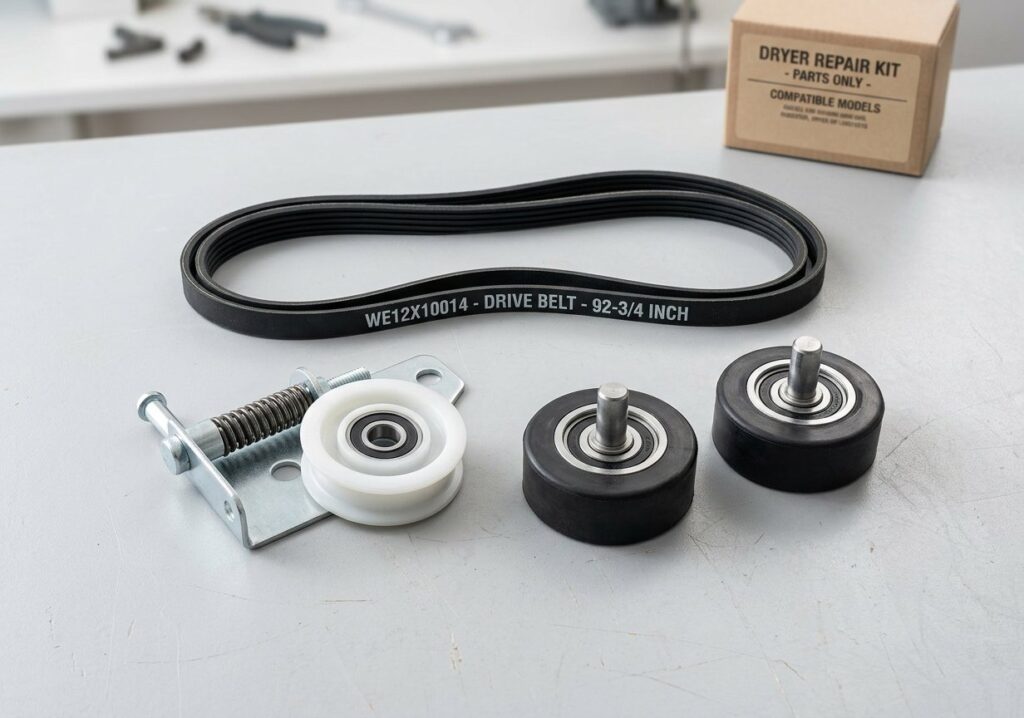
Pro tip: If you find multiple worn components, which is very common, replace them all at once. Drum roller kits typically include rollers, the idler pulley, and the belt together. Saves significant labor cost versus fixing one thing at a time.
6. Know When To Stop
If you’ve opened the cabinet and you see:
- Evidence of burning or scorched components
- Damaged wiring
- A broken motor mounting
- Gas-related components near the repair area
⛔ Stop and call a professional. These situations require trained hands.
Honestly? For most drum rotation problems, a professional repair makes more economic sense than a DIY attempt — especially in a city like Los Angeles, where your time genuinely has high value and a mistake means a second service call anyway.
Call a pro if:
- The drum is completely locked and won’t move at all
- You smell burning — either friction or electrical
- You opened the cabinet and aren’t sure what you’re looking at
- The dryer is a front-load or newer Samsung/LG model (these have more complex drum systems)
- The motor is involved — motor replacement requires electrical knowledge
- Your dryer is still under warranty (DIY repairs can void it)
- You’ve already replaced one part, and it’s still not working
A qualified appliance repair technician in Los Angeles can diagnose and repair a drum rotation problem in a single visit, usually in under two hours. CityFix Appliance offers same-day and next-day dryer repair service throughout the Los Angeles area, with upfront pricing and no surprise charges.
People Also Ask: Dryer Drum Questions Answered:
Why is my dryer drum hard to turn, but the motor still runs?
If the motor runs (you hear a hum) but the drum won’t turn, the most likely cause is a broken drum belt. The belt connects the motor to the drum, and when it snaps, the motor runs freely while the drum sits still. This is one of the more common dryer repairs and is usually straightforward for a technician to fix.
Can I still use my dryer if the drum is hard to turn?
No. Running a dryer when the drum is seized or hard to turn will burn out the motor from overload, potentially damage the drum itself, and create a fire risk from friction heat. Stop using it until it’s repaired.
How long do dryer drum rollers last?
Drum support rollers typically last 8–12 years under normal use. In high-use households, or in Los Angeles, where dryers often run year-round without a break from seasonal hand-washing, they may wear out in 5–7 years. The first sign is usually a thumping sound, well before the drum becomes hard to turn.
What does a broken dryer belt sound like?
A broken belt often makes a loud snapping sound when it breaks, followed by silence. The motor may hum, but you’ll hear no tumbling. Sometimes a belt breaks mid-cycle quietly, and you only notice when clothes are still wet after a full cycle. Turning the drum by hand will feel completely free and loose with no resistance.
Why does my dryer squeak when it first starts but then stop?
A squeaking sound that occurs upon start-up and disappears after a minute usually indicates worn drum glides or a dry idler pulley bearing. The squeaking sound will stop as the parts warm up and expand slightly. This is an early warning sign; ignoring it will eventually cause the drum to become difficult to turn or the part to fail.
Is a dryer drum that’s hard to turn dangerous?
Yes, in two ways. First, friction from seized components generates heat that can scorch nearby lint, a real fire hazard in enclosed laundry spaces. Second, forcing a seized drum puts massive strain on the motor, which can fail in a way that’s far more expensive to repair. Take it seriously.
How do I know if my dryer drum bearing is bad?
Signs of a bad drum bearing include: a grinding or metal-on-metal sound during operation, a burning smell near the back of the dryer, the drum being hard to turn, specifically at the center rear, and visible scoring or damage to the bearing shaft when the cabinet is opened. Rear drum bearings are one of the more labor-intensive repairs because the entire drum typically needs to be removed.
Can a clogged dryer vent cause the drum to be hard to turn?
Not directly, a clogged vent causes overheating and poor drying, but it won’t physically lock the drum. However, if your dryer is overheating due to a blocked vent, it can accelerate wear on drum rollers and bearings, causing them to fail sooner. If you haven’t cleaned your dryer vent recently, it’s worth doing alongside any drum repair.
A drum that’s difficult to turn manually is often an early warning sign, not the final failure. Left unchecked, the same worn belt, pulley, or motor issue can progress until the dryer refuses to start entirely. That’s why we also recommend reading our complete guide on dryer won’t start but has power: every cause explained.
Don’t Wait for a Stiff Dryer Drum
A dryer drum that’s hard to turn by hand is telling you something inside has failed, and the longer you wait, the worse and more expensive the damage gets. In most cases, you’re dealing with worn drum rollers, a bad idler pulley, worn glides, or a jammed blower wheel. All of these are repairable.
If you’re in Los Angeles and your dryer drum is giving you trouble, CityFix Appliance is ready to help. Our technicians service all major brands, Whirlpool, LG, Samsung, Maytag, Kenmore, GE, and more, across the entire LA area, from the Valley to the South Bay.
Don’t let a seized drum turn into a burned-out motor.


3 Responses
Great content! Keep up the good work!
Good a blog toper