Direct answer: Most cooktop problems aren’t repair problems; they’re cleaning problems that got ignored too long. Wiping the surface after every use, drying gas burner parts fully, and using the right cleaner for glass, electric, or induction surfaces prevent the majority of ignition issues, uneven heating, and scratches. But if a burner clicks without lighting, a zone won’t heat evenly after a proper clean, or you smell gas, that’s no longer a cleaning issue, it’s time to call a licensed technician.
We’ve written this the way we’d actually explain it to someone standing in their kitchen, not the way a product page explains it. Most cooktop guides online are written by appliance retailers trying to sell a cleaning kit. This one is written by people who get called out when the cleaning kit didn’t fix it, so we can tell you the part that actually matters: how to know which one you’re dealing with.
Why Cooktops Wear Out Faster in Los Angeles Kitchens
Two things speed up cooktop wear here more than in most places. Harder water in parts of LA leaves mineral residue on glass and induction surfaces that, left alone, becomes the cloudy film people assume is a stain when it’s really buildup. And homes here tend to cook more often at higher heat, more grease cycles, more spills, more chances for a small habit to turn into a real problem. Neither means your cooktop is defective. It just means the routine matters more here than the manual lets on.
The One Habit That Prevents Most Cooktop Problems
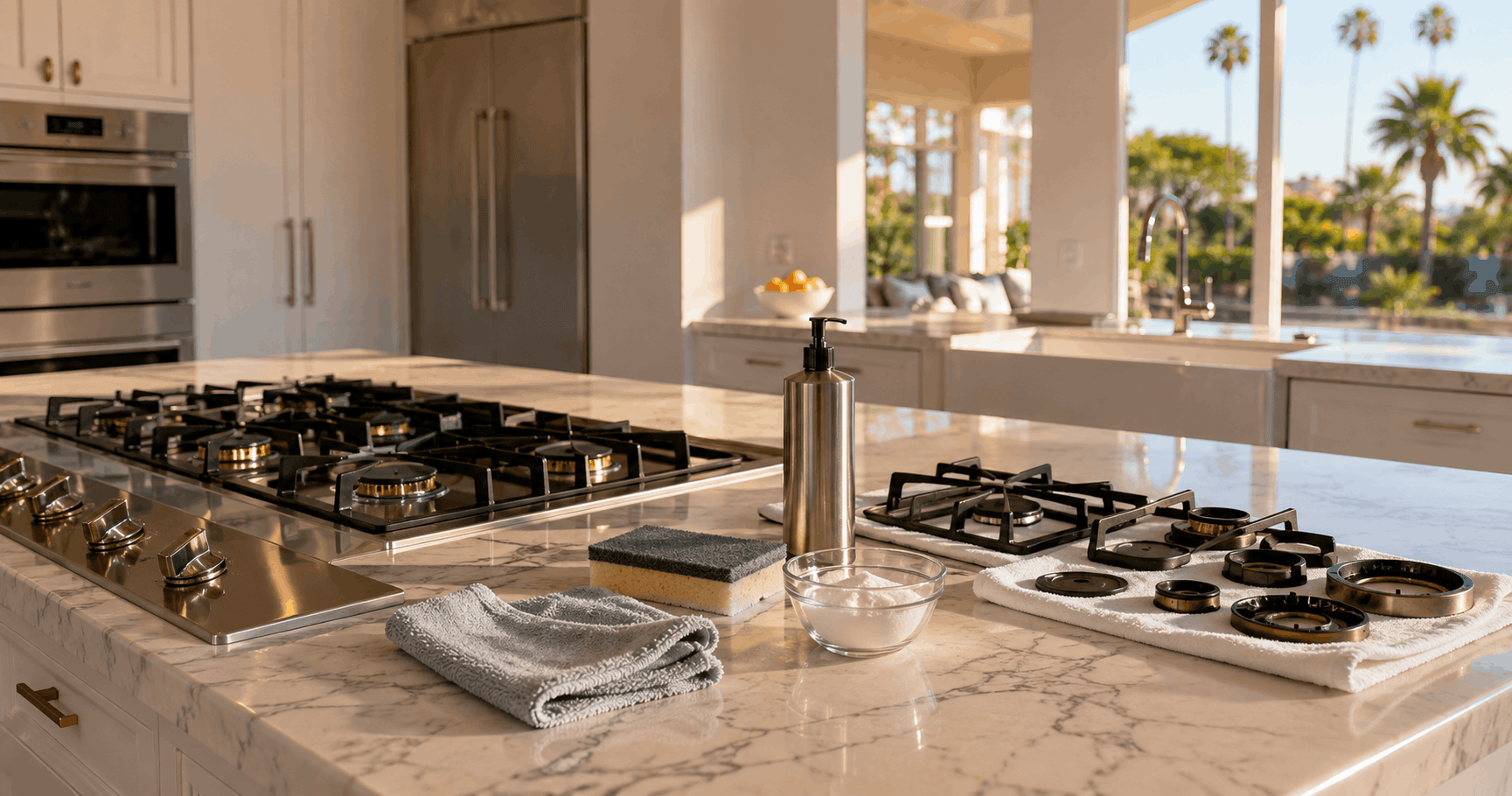
Wipe the cooktop down after it cools, every time you cook, not once a week, every time. Grease and sugary spills harden fast, and once baked on, they take more scrubbing to remove, which is exactly what scratches glass and dulls finishes. On gas models, dry the grates and burner caps completely before reassembly; trapped moisture around the igniter is one of the most common reasons a burner starts clicking without lighting. Everything below is really just a version of that habit, adjusted for your cooktop type.
Gas Cooktops: What’s Normal and What’s Not
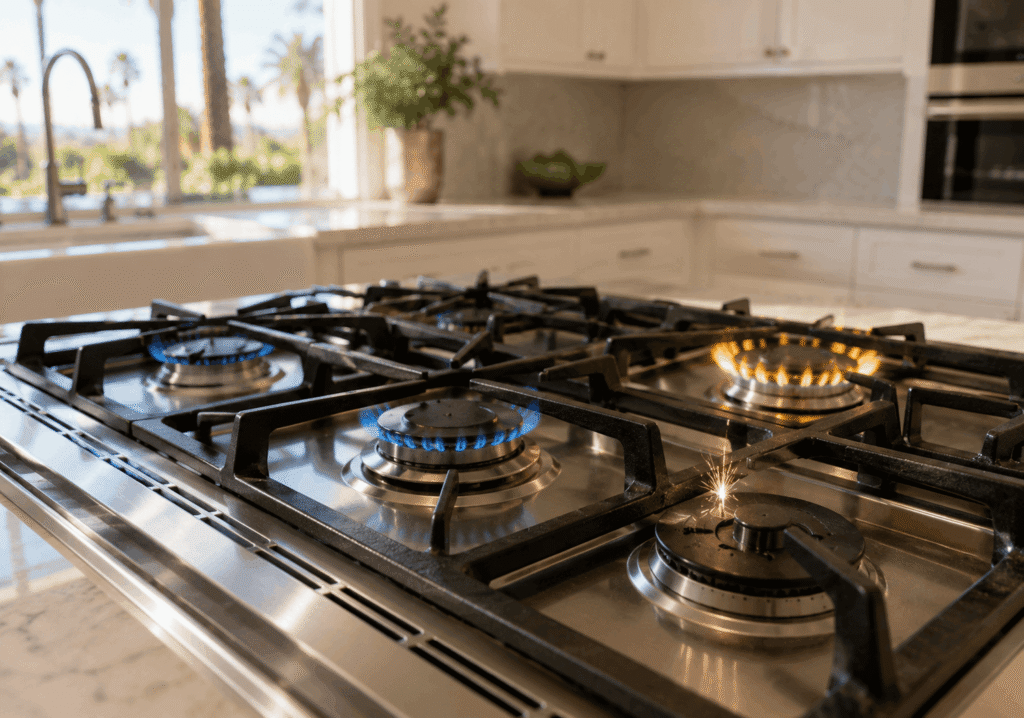
A steady blue flame is normal. A weak, yellow, or uneven flame usually means the burner ports are partially blocked, a cleaning fix, not a repair. Remove the grates and caps, clear the openings gently with a toothpick or cotton swab (never anything metal that could widen the holes), and make sure everything is fully dry before reassembly.
Here’s where it flips into repair territory: if the burner clicks repeatedly and won’t light, or a flame lights and then dies on its own, cleaning won’t fix that; it’s the igniter, gas valve, or a wiring issue, and it needs a technician. If you ever smell gas, don’t troubleshoot at all. Turn it off and call for service immediately.
Electric Cooktops: The Mistake Almost Everyone Makes
The most common mistake isn’t dirt buildup; it’s cleaning the coil while it’s still warm, which is both a burn risk and a good way to damage the element. Let it cool fully first. Then, if your model allows it, lift the coils, wipe them with a damp cloth (never submerge), and clean underneath around the drip pans.
If a coil doesn’t sit flush after cleaning, or one zone heats noticeably slower or less evenly even after a proper clean, that’s usually a connection problem, not a residue problem, worth checking before it trips a breaker or fails.
Glass and Ceramic Tops: Why the ‘Stain’ Might Not Be a Stain
This is the surface people damage the most, almost always by accident. Abrasive pads, steel wool, or a pan with a rough or warped bottom dragged across the glass all cause the same thing: permanent micro-scratches that eventually look like a dull haze. A lot of what homeowners call a stubborn stain on an older glass cooktop is actually years of wear from the wrong cleaning tool, not buildup, and no cleaner fixes that, because it’s physical damage, not residue.
The fix going forward is timing and tools: handle spills while fresh with a soft cloth or non-abrasive sponge, and save a baking soda paste for anything baked-on. Fresh spills take a wipe. Hardened spills take pressure, and pressure is what causes the damage in the first place.
Induction Cooktops: It’s Usually the Pan, Not the Cooktop
Induction runs cooler to the touch, which fools people into thinking it needs less care; it needs different care, not less. Spills can still bake onto the glass around the cooking zone, and greasy or damp touch controls are one of the most common reasons people think their cooktop is glitching when it’s really just a cleaning issue on the panel.
If the cooktop won’t detect your cookware, check the pan first; induction needs flat-bottomed, magnetic cookware, and a warped or dirty pan bottom is the most common cause of a ‘not detected’ error, not the cooktop itself. But if it keeps shutting off randomly, throws repeated error codes, or won’t detect cookware you know is compatible, that’s the point to stop troubleshooting and get a real diagnosis.
When Cleaning Won’t Fix It
This is the part most guides skip, and it’s the part that actually saves people money, because the highest cost isn’t the repair itself; it’s the damage that happens while someone keeps cleaning something that was never a cleaning problem. Call a licensed technician if you notice:
- A gas burner that clicks repeatedly but won’t ignite, or a flame that won’t stay lit
- Any smell of gas: stop everything and call immediately
- An electric coil or induction zone that heats unevenly or slower than before, even after cleaning
- An induction cooktop that shuts off randomly or won’t detect cookware you know is compatible
- Repeated error codes on any cooktop type
- Visible sparking, burning smells, or scorch marks near controls or burners
None of these are DIY-safe. Gas, electrical, and sensor issues pose real safety risks, and pushing through them with more cleaning usually only delays a fix that’s needed anyway, often at a higher cost once the original issue has caused secondary damage.
Following the National Fire Protection Association’s kitchen safety guidelines can help reduce the risk of cooking-related fires and appliance accidents.
Cleaning vs. Repair: The Quick Way to Tell Them Apart
If you only remember one thing: if the problem is dirt, you can fix it yourself. If the problem is power, gas, sensors, sparks, or something that keeps coming back after a proper clean, it’s a repair issue, and the sooner it’s looked at, the less likely it is to spread to other parts of the appliance.
Why Homeowners in Los Angeles Call CityFix
CityFix Appliance has over 15 years of experience repairing gas, electric, and induction cooktops across Los Angeles and Glendale. Our technicians are licensed; we offer same-day or next-day appointments; there’s no service call fee when you move forward with the repair; and every completed repair comes with a 90-day warranty. If any of the signals above sound familiar, it’s worth a call before the issue gets more expensive to fix.
Notice one of these signs on your cooktop? Book a same-day appointment or call; we’ll tell you honestly whether it’s a quick fix or something that needs a closer look.
Frequently Asked Questions
How often should you clean a cooktop?
After every use, not once a week. A quick wipe while it’s cool prevents the buildup that causes most of the harder problems people end up calling about.
Can you use baking soda on a glass cooktop?
Yes, a baking soda paste applied gently with a soft cloth is safe for baked-on spots, as long as you’re not scrubbing hard enough to scratch the surface.
Why does my gas stove burner click but not light?
Usually moisture or grease around the igniter. If drying and cleaning it doesn’t fix the clicking, it’s an igniter or gas-flow issue that needs a technician.
How long does a cooktop usually last?
With regular cleaning and prompt attention to early warning signs, most cooktops last 12 to 15 years. Neglected maintenance, especially ignored ignition issues or scratched glass surfaces, tends to shorten that significantly.
Why is my induction cooktop not detecting the pan?
Almost always, the pan, not the cooktop, needs flat-bottomed, magnetic cookware. If a pan you know is compatible still isn’t detected, that’s when it’s worth having the cooktop itself checked.