Quick Answer: Yes – hot weather affects refrigerator performance. As the temperature around your fridge rises, the compressor has to work harder to push heat out, since the whole system depends on the air outside being cooler than the coils. In a Los Angeles summer, that means longer compressor run times, higher energy bills, and, if the fridge is already struggling, food that doesn’t stay as cold as it should. Most of the time it’s manageable with a few adjustments. Sometimes it’s an early warning sign worth paying attention to.
If you’ve noticed your refrigerator running a little louder, a little more often, or your kitchen feeling warmer than usual by August, you’re not imagining it. Summer is genuinely harder on a refrigerator than any other season, and in Los Angeles, where kitchens can sit well above 80°F on the hottest afternoons- that effect shows up more than most homeowners realize.
Here’s what’s actually happening, what to watch for, and when a hot summer turns into a real refrigerator problem.
6 Signs Your Refrigerator Is Struggling With the Heat
Most of these are easy to miss because they build up gradually over a hot week, not all at once.
1. The compressor runs almost constantly. A little extra cycling in summer is normal. A fridge that never seems to shut off, even in the middle of the night when the kitchen has cooled down, is a sign it’s falling behind.
2. The kitchen feels warmer near the fridge. Since it’s expelling more heat than usual, you may notice warm air coming off the back or bottom vents more than you did in spring.
3. Food near the front of the fridge feels less cold. The areas closest to the door are the first to show temperature drift, since they lose the most cool air every time the door opens.
4. Ice cream and frozen items feel softer than normal. This is one of the clearest signs the freezer is losing ground, even if the fridge section still feels fine.
5. Your energy bill jumps noticeably in July and August. Some increase is expected with a harder-working compressor. A sharp, sudden jump is worth investigating.
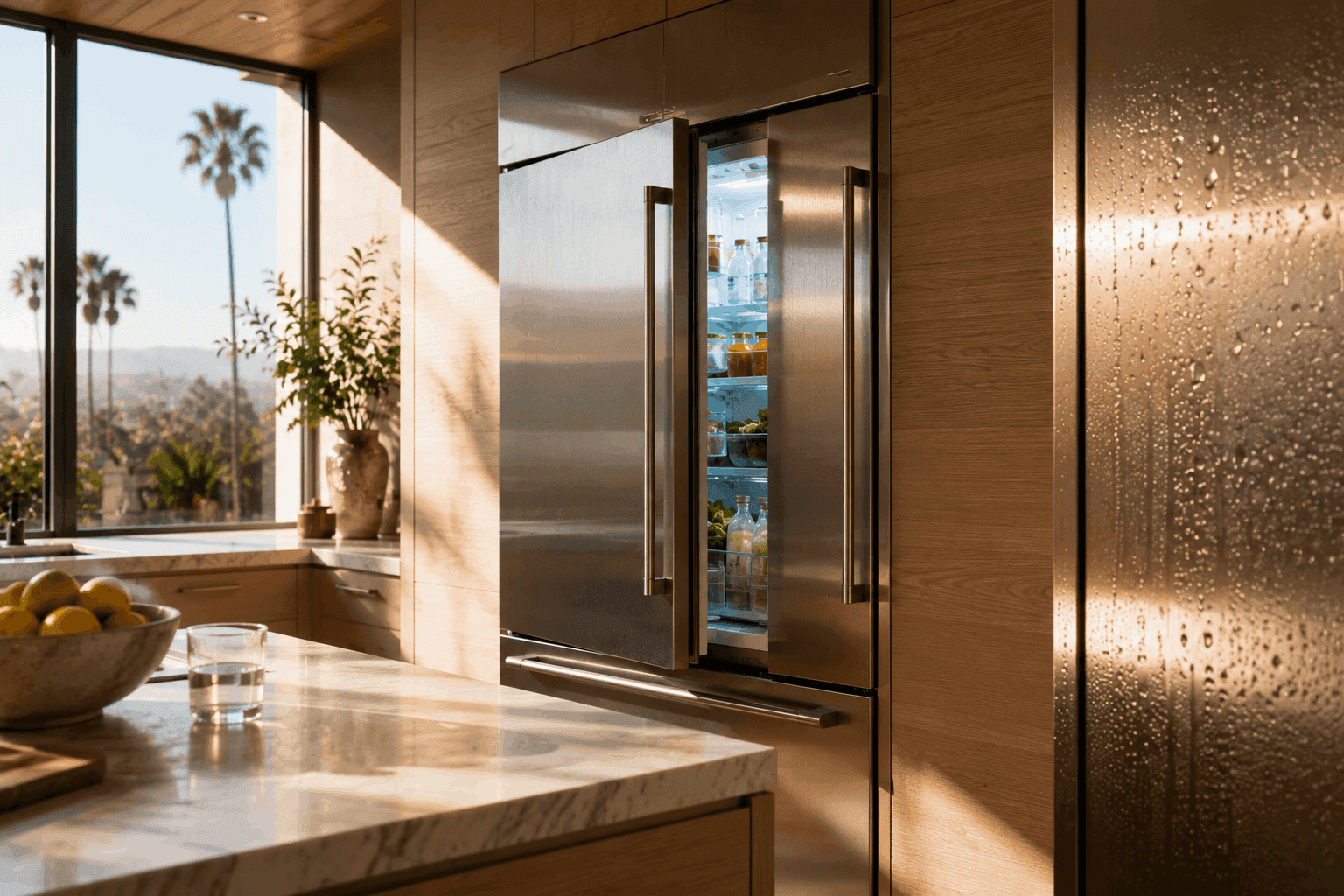
6. Condensation appears on the exterior or around the door seal. Warm, humid Los Angeles air meeting a cool refrigerator surface can cause sweating, especially if the seal isn’t closing as tightly as it should.
Why Heat Affects Your Refrigerator in the First Place
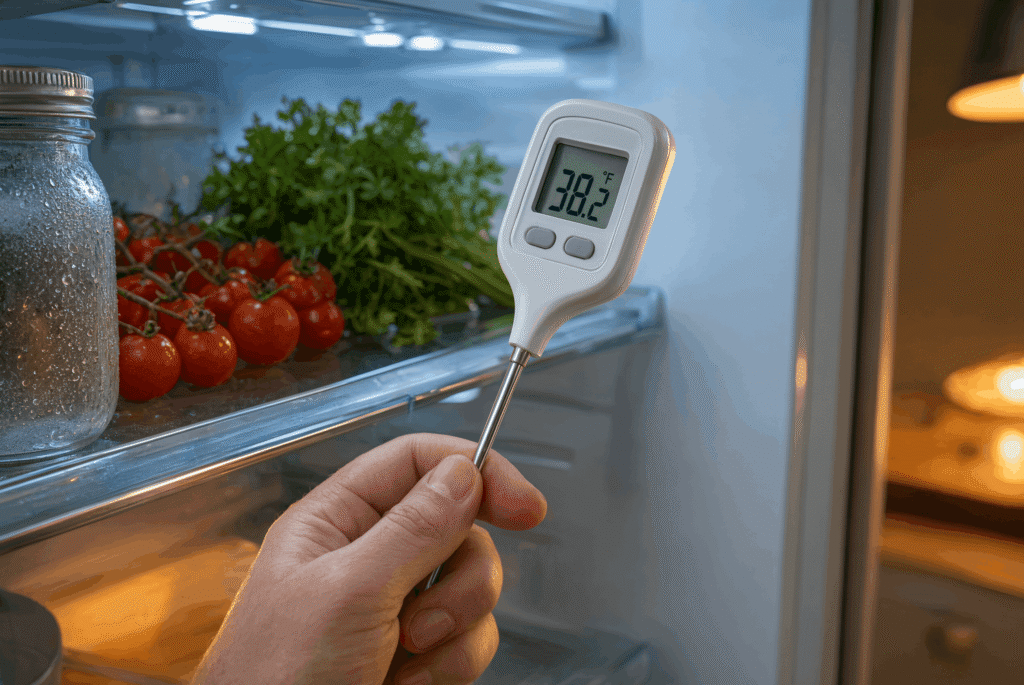
A refrigerator doesn’t actually produce cold air. It delivers thermal energy from one location to another. Heat is absorbed by the refrigerant in the coils and is transported to the condenser coils and released to the air of the room. This is the key to the entire system to ensure heat does not go to the coils and to ensure the air in the room is colder.
When the air in the room raises the temperature. For example, when the air increases to 95 degrees Fahrenheit, and the AC system is getting the air to a lower temperature and the oven is heating the air to prepare dinner, the temperature difference is getting smaller and smaller. The refrigerator will need to run the compressor more and for longer periods of time to get the same effect as what it previously got in twenty minutes. The fridge is working harder to do the same effect than it needs to on what is considered a normal day.
What You Can Do About It
The good news is that most of this is manageable, and the fixes are things you can do yourself in under half an hour.
Give it breathing room. Refrigerators need a few inches of clearance on the sides and back so heat can escape the coils rather than build up behind the unit. If yours is tucked tightly into cabinetry, check that the vents aren’t blocked.
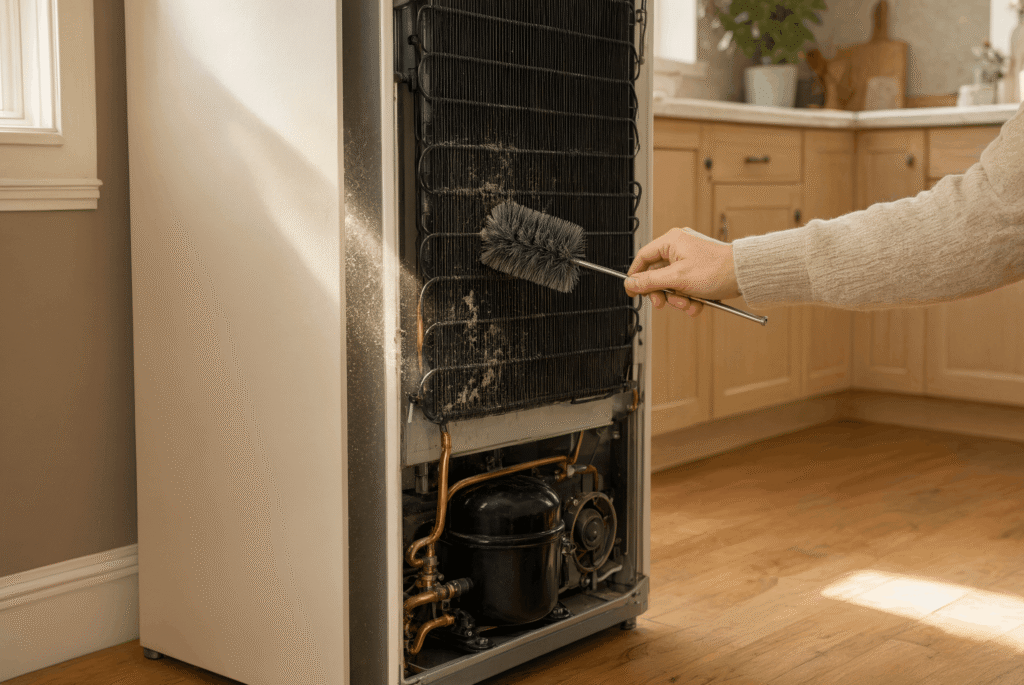
Clean the condenser coils. This is the single biggest thing you can do. Dust acts like a blanket over the coils, trapping heat right when the fridge needs to release it most. A five-minute cleaning with a coil brush or vacuum attachment can make a real difference during a heat wave.
Check the door seal. A gasket that doesn’t seal tightly lets warm air sneak in constantly, which is the last thing your fridge needs when it’s already fighting the heat outside. Run your fingers around the seal and look for any spots that feel loose or cracked.
Avoid placing hot food directly inside. Letting leftovers cool on the counter for a bit before refrigerating takes some of the extra heat load off the compressor, especially during the hottest part of the day.
Limit how long the door stays open. Every open door lets warm kitchen air in, and in summer that air is warmer than usual. A few extra seconds here and there add up over a full day.
Keep it out of direct sun and away from the stove or dishwasher. If your kitchen layout puts the fridge near a window or next to appliances that generate heat, it’s working against itself all day long
When It’s More Than Just the Heat
Here’s the part that matters most: hot weather makes an already-struggling refrigerator worse, but it doesn’t create problems out of nowhere. If your fridge is properly maintained, with clean coils, tight seals, and reasonable clearance, it should handle a Los Angeles summer without major issues.
If you’ve made these adjustments and you’re still seeing warning signs, the heat probably isn’t the real story. It’s likely exposing something that was already wearing out, a condenser fan that’s slowing down, a compressor nearing the end of its life, or a refrigerant issue that needs a licensed technician.
Watch for these signs that go beyond normal summer strain:
- The fridge stays warm even after coils are clean and the door seals tightly
- The compressor runs constantly for days, even overnight when the house is cool
- You hear grinding, buzzing, or clicking that wasn’t there before
- Food is spoiling noticeably faster than it should
- Ice is building up inside the fresh food section, not just the freezer
These point to a mechanical issue rather than a seasonal one, and they’re worth having looked at before the situation gets worse; a refrigerator that’s already struggling in July often doesn’t recover on its own by August.
Did You Know?
Refrigerators are tested and rated to perform in ambient temperatures up to around 110°F, but that’s a lab number; real kitchens rarely hit that on their own. The bigger issue is sustained heat over days or weeks, since it’s the cumulative strain on the compressor and condenser fan that causes problems, not any single hot afternoon.
The Bottom Line
A hot LA summer is genuinely tougher on your refrigerator, and a bit more compressor noise or a slightly higher energy bill in July is normal. But if you’ve cleaned the coils, checked the seal, and given it some breathing room, and it’s still struggling to keep up, that’s not the heat anymore; that’s a sign something needs a closer look.
Noticing warning signs? Book same-day refrigerator repair or call (818) 937-1818, and a technician can find out whether it’s the heat or something more before it turns into a full breakdown.
Frequently Asked Questions
Does hot weather really affect how well a refrigerator cools?
Yes. Refrigerators release heat into the surrounding air, so when the room is hotter, the compressor has to work longer and harder to keep the interior at a safe temperature.
Is it normal for my refrigerator to run more in summer?
Some increase in compressor cycling is normal during hot weather. A fridge that never shuts off, even overnight, is a sign it’s struggling to keep up.
Why does my energy bill go up in summer because of my refrigerator?
A refrigerator working harder to overcome heat runs its compressor more often, which increases energy use. Clean coils and a tight door seal help minimize the increase.
Should I turn my refrigerator’s temperature dial colder in summer?
Not usually. It’s better to address the actual causes- dirty coils, a weak seal, poor airflow- than to force the compressor to work even harder by lowering the setting.
How do I know if it’s the heat or an actual refrigerator problem?
If cleaning the coils, checking the seal, and giving the unit clearance doesn’t help within a day or two, or if you notice grinding noises, constant running, or spoiling food, it’s likely a mechanical issue rather than normal seasonal strain.