
You open the dishwasher after a full cycle, and there it is, a puddle of dirty, murky water sitting right at the bottom. Your dishes are still wet, your kitchen smells off, and you have no idea what went wrong.
A dishwasher not draining is one of the most common appliance complaints homeowners deal with. The good news? In many cases, you can fix it yourself in under 30 minutes. In others, the problem runs deeper, and knowing the difference can save you a lot of time, money, and frustration.
In this guide, you’ll learn the exact causes of dishwasher drainage problems, a step-by-step fix process, how to drain your dishwasher manually, and when it makes more sense to call a professional repair service near you instead of guessing.
6 Reasons Your Dishwasher Won’t Drain (And What Each One Means)
Drainage problems don’t usually come out of nowhere. One of these six causes is almost always responsible:
- Clogged filter or drain basket — Food particles, grease, and soap scum collect in the filter over time. Once it’s blocked, water can’t exit the tub.
- Blocked or kinked drain hose — The hose that carries water from the dishwasher to your sink can get bent, crushed, or clogged, especially after moving the appliance.
- Garbage disposal issue — If your dishwasher drains through the disposal, a clogged disposal or a missing knockout plug will stop drainage completely.
- Faulty drain pump — The pump forces water out during the drain cycle. If it’s jammed by debris or the motor has failed, water goes nowhere.
- Blocked air gap — The small cap on your sink counter can get clogged with buildup, preventing proper drainage flow.
- Slow or blocked sink drain — Because dishwashers share the same drain line as your sink, a backed-up sink can push water back into the dishwasher tub.
How to Tell If You Have a Dishwasher Drain Problem: Key Warning Signs
Not sure if it’s actually a drain issue? These are the symptoms that point directly to it:
| What You’re Seeing | What It Likely Means |
|---|---|
| Standing water after a full cycle | Clogged filter, blocked hose, or pump failure |
| Dishes aren’t fully clean | Water isn’t recirculating properly |
| Unpleasant smell from the dishwasher | Stagnant water sitting in the drain area |
| Gurgling sounds during the drain cycle | Partial blockage in the drain line |
| Water backing up into the sink | Shared drain line clog or disposal issue |
| Dishwasher stops mid-cycle | Drainage error triggering the machine to pause |
If you’re seeing one or more of these, keep reading, there’s a good chance the fix is simpler than you think.
Step-by-Step Guide: How to Fix a Dishwasher That Won’t Drain
Work through these steps in order. Most homeowners find the solution in the first two or three.
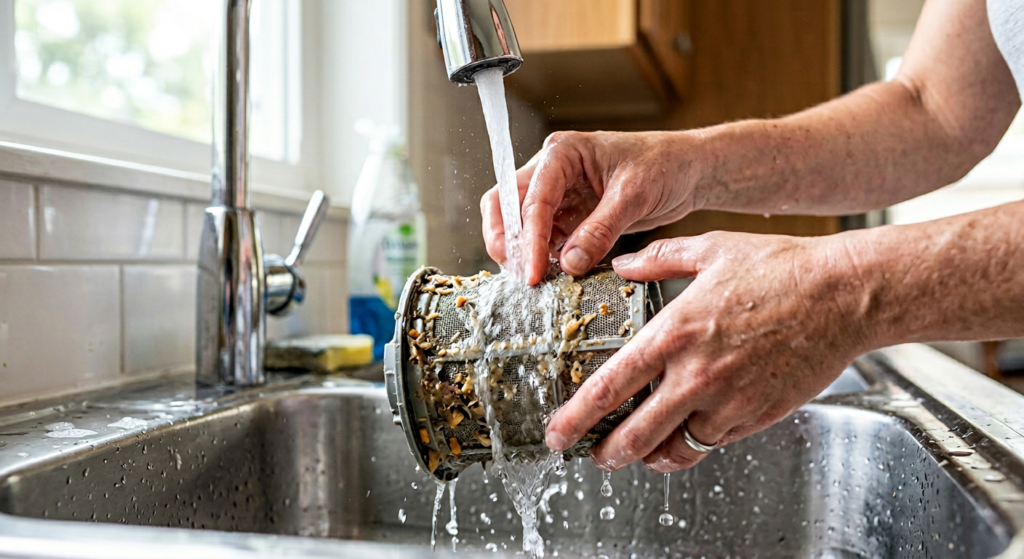
- Clean the filter
Pull out the lower rack and locate the cylindrical filter at the bottom of the tub, it usually twists out by hand. Rinse it under warm running water and scrub gently with a soft brush. Reinstall it firmly and run a short rinse cycle to test. - Check the drain hose
Look under the sink for the hose connecting your dishwasher to the drain. Straighten any visible kinks. The hose should have a high loop, at least 20 inches off the floor, to prevent backflow. A cracked or collapsed hose needs replacing. Not sure which hose brand fits your model? Check the support pages for Whirlpool, Bosch, or GE for part numbers. - Clear the garbage disposal
Run your garbage disposal for 20–30 seconds to clear any built-up debris. If the disposal was recently installed, check for an intact knockout plug at the dishwasher inlet, it must be removed for water to drain through. - Clean the air gap
Unscrew the air gap cap on your sink. Use a paper towel to clear out any debris inside. Rinse and reassemble. This takes about two minutes and often solves the problem immediately. - Run a vinegar cleaning cycle
Pour one cup of white vinegar into the bottom of an empty dishwasher and run a hot water cycle. This breaks down grease and light mineral buildup inside the drain line. According to the EPA WaterSense Program, regular appliance maintenance also reduces unnecessary water waste over time. - Inspect the drain pump
Turn off power at the breaker first. Remove the lower spray arm and access panel to reach the pump. Clear any visible debris, broken glass and food chunks are common culprits. If the pump motor hums but no water moves, the pump itself likely needs replacing.
⚠️ Heads up: If you reach step 6 and still have standing water, or if the pump shows signs of damage, stop here. Continuing to run a dishwasher with a failing pump can cause water damage to your floor and cabinetry. This is a good point to call in a professional dishwasher repair service.
How to Drain a Dishwasher Manually (Quick Fix)
If there’s standing water you need to deal with right now, before you even start troubleshooting, here’s how to drain your dishwasher manually:
- Turn off power to the dishwasher at the circuit breaker.
- Lay old towels around the base to catch any spills.
- Use a cup or ladle to scoop out as much water as possible from the tub.
- Use dry towels or a wet/dry vacuum to absorb the remaining water.
- Once it’s dry, proceed with the troubleshooting steps above.
Do not run another cycle until you’ve figured out what’s causing the problem. Running it again with a drainage issue will only refill the tub with dirty water and potentially cause more damage.
Need someone to take a look right away? Our experienced technicians offer same-day dishwasher repair near you, no guesswork, no waiting around.
When DIY Fixes Don’t Work – Time to Call a Pro
You’ve cleaned the filter, checked the hose, cleared the disposal, and run the vinegar cycle. Still have dishwasher standing water? That tells you the problem is something you can’t fix with basic household tools.
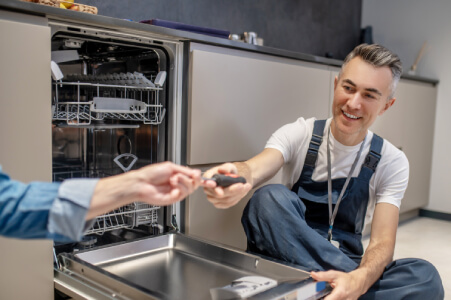
Here’s what’s likely happening at that point:
Drain pump failure
The drain pump is the engine behind every drainage cycle. When the motor burns out or the impeller breaks, no amount of cleaning will fix it. Pump replacement requires disassembly and the right replacement part for your specific model, it’s a job for a technician.
Internal blockage you can’t reach
Some clogs form deep inside the drain line or inside the pump housing itself. Without the right tools to open the pump or disconnect the plumbing, these blockages stay put and get worse over time.
Electrical or control board issue
Sometimes the dishwasher isn’t draining because it’s not completing the drain cycle at all, not because of a physical clog, but because of a faulty control board or a wiring issue. This one almost always requires a professional diagnosis.
🔴 Important: If your dishwasher still isn’t draining after trying the steps above, it’s best to contact a professional dishwasher repair service as soon as possible to avoid further damage to the appliance, your flooring, and the cabinetry underneath.
Our team of experienced technicians handles all of these issues quickly and affordably. We diagnose the exact cause, explain what needs to be done, and fix it right the first time, no unnecessary upsells, no long wait times.
📞 Get fast, affordable dishwasher repair near you. Call us today or book online, most repairs are completed same-day or next-day.
How to Prevent Dishwasher Drain Problems in the Future
A few simple habits will keep your dishwasher draining smoothly for years:Scrape Plates Before Loading
Scrape Plates Before Loading
You don’t need to pre-rinse, but remove large food chunks that could clog the filter. Pre-rinsing actually wastes water and can confuse soil sensors.
Clean the Filter Monthly
It takes about five minutes and prevents the majority of drain clogs entirely. Set a monthly reminder and make it a habit.
Run the Disposal First
Run your garbage disposal for 30 seconds before starting the dishwasher. This clears the shared drain line and ensures water has a clear exit path.
Use the Right Amount of Detergent
Too much detergent causes soap buildup that coats the inside of the drain hose and filter over time. Use only the manufacturer-recommended amount.
Run a Monthly Cleaning Cycle
Pour one cup of white vinegar into the bottom of an empty dishwasher and run a hot wash cycle. It dissolves grease and mineral buildup before it becomes a clog.
Check the Drain Hose Annually
Especially if you’ve had plumbers or contractors working under your sink. A displaced or kinked hose is a slow-building problem that’s easy to miss. For buying guides and reliability ratings, Consumer Reports is a trusted resource.
Also dealing with other appliance issues? Our team handles washer repair, dryer repair, refrigerator repair, and more across all of Los Angeles County.
Dishwasher Not Draining: Common Questions Answered
Why is my dishwasher not draining completely?
The most common cause is a clogged filter or drain basket, food debris and grease build up over time and restrict water flow. A kinked drain hose, a clogged garbage disposal, or a partially blocked air gap can also cause incomplete draining. Start by cleaning the filter and running the disposal, then work through the steps above.
Can I force my dishwasher to drain?
Yes. You can manually remove standing water using a cup or ladle and a wet/dry vacuum. However, this doesn’t fix the underlying cause. After removing the water, follow the troubleshooting steps in this guide to identify and fix the actual drainage problem before running another cycle.
Is it normal for a dishwasher to have some water at the bottom?
A small amount of water, typically under one cup, at the very bottom of the tub is normal and intentional. It keeps the door seal from drying out. However, if you can see standing water covering the bottom of the tub after a completed cycle, that’s a drain problem that needs to be addressed.
How do I know if the drain pump is broken?
Signs of a failing drain pump include: water that won’t drain even after cleaning the filter and clearing the hose, a humming sound during the drain cycle with no water movement, or the dishwasher displaying a drain error code. If you hear the motor running but water stays put, the pump impeller is likely damaged and the unit needs professional repair.
Can a clogged dishwasher drain cause damage?
Yes, and more damage than most homeowners expect. Standing water accelerates motor wear, promotes mold and mildew growth inside the tub, causes persistent odors, and can eventually leak onto your kitchen floor and damage the cabinetry underneath. Addressing a drain problem quickly is always the smarter and less expensive choice.
Still Have Standing Water? Here’s What to Do Next
A dishwasher that won’t drain is frustrating, but it’s rarely a mystery. In most cases, a clogged filter, a kinked hose, or a garbage disposal issue is all it takes to stop your machine in its tracks, and all three are fixable in under 30 minutes with the steps above.
When the problem goes deeper, a failed pump, an internal blockage, or an electrical fault, that’s when you need someone with the right tools and experience. Trying to push through those repairs without proper knowledge often makes things worse and more expensive.
📋 Quick Recap
- Step 1: Clean the filter — this fixes most drain problems
- Step 2: Check for a kinked or blocked drain hose
- Step 3: Run the garbage disposal and check for knockout plug
- Step 4: Clear the air gap on your sink
- Step 5: Run a hot vinegar cleaning cycle
- Step 6: Inspect the drain pump for debris or damage
- Still not working? Call a professional — CityFix Appliance Repair, (818) 937-1818
If you’ve tried everything in this guide and your dishwasher is still standing in water, don’t wait it out. The longer standing water sits in the appliance, the more damage it causes.
Get your dishwasher fixed today — same-day service available across Los Angeles.